Salon Intake Form Fields Checklist for Beauty Salons
Discover the essential salon intake form fields checklist. Ensure a personalized, safe client experience with our comprehensive guide!

Salon Intake Form Fields Checklist for Beauty Salons

A salon intake form is a client onboarding document that collects contact details, health history, service preferences, and signed consents before treatment begins. Using a complete salon intake form fields checklist is the difference between a protected, personalized client experience and a liability gap that no apology can fix. Tools like Consentify and Acuity Scheduling have made it easier than ever to collect this data digitally, but the fields you choose still determine how useful that data becomes. Get the checklist right, and every appointment runs faster, safer, and with fewer surprises.
1. What are the essential client contact details to include?
Contact information is the foundation of every client intake form. Without accurate contact data, you cannot confirm appointments, send aftercare instructions, or follow up after a service.
Every beauty salon form checklist should include these contact fields:
- Full legal name (for records and release forms)
- Date of birth (for age verification and health context)
- Primary phone number (calls and text reminders)
- Email address (digital confirmations and promotions)
- Preferred communication method (text, email, or phone)
- Pronouns (optional, but signals a welcoming environment)
- Emergency contact name and phone number
The emergency contact field is one most salons skip. Emergency contact details are a standard field on professional intake templates for good reason. A client who has a reaction to a chemical treatment needs someone you can call immediately.
Pro Tip: Ask for preferred communication method on the form itself. Clients who prefer text are far more likely to confirm appointments and respond to follow-up messages than those who only list an email.

Preferred communication data also feeds directly into your marketing. Salons that capture this field report fewer no-shows because reminders reach clients through the channel they actually check.
2. Why medical history and allergies belong on every form
Medical disclosures are not optional fields. They are the legal and safety backbone of your cosmetology intake form. Skipping them exposes your salon to liability and your clients to real harm.
Health fields to include on every salon client questionnaire:
- Known allergies (fragrance, latex, hair dye components, preservatives)
- Skin or scalp conditions (psoriasis, eczema, seborrheic dermatitis)
- Current medications (blood thinners, Accutane, topical steroids)
- Pregnancy or breastfeeding status
- Recent surgeries or medical procedures
- History of adverse reactions to salon treatments
Each of these fields directly affects what services you can safely perform. Accutane, for example, makes skin highly sensitive to waxing and chemical peels. A client who does not disclose this puts both of you at risk.
Why this matters legally: Documentation completeness often matters more than whether a patch test was conducted. Audits fail due to missing consent, signatures, or dated evidence, not because a test was skipped. Your form is your paper trail.
Use a large open text box alongside structured checkboxes for medical history. Checkboxes catch the common conditions. The open field catches everything else, including the medication a client forgot to mention until they were already in the chair.
3. Service history and treatment goals that protect and personalize
Knowing what a client wants is only half the picture. Knowing what has already been done to their hair or skin is what keeps you from making a costly mistake.
Include these fields in your service history section:
- Previous chemical treatments (color, bleach, relaxer, keratin)
- Date of last chemical service (approximate is fine)
- Any adverse reactions to prior treatments
- Current hair or skin care routine (products used at home)
- Service goals (color target, style reference, skin concern)
- Inspiration photos or links (optional but highly useful)
Prior chemical services and consent signatures are listed as required fields in cosmetology intake standards. This is because applying bleach over a relaxer without knowing it can cause severe breakage or chemical burns.
Distinguishing between a consultation intake form and a service record is also critical here. Intake forms gather disclosures and consent before treatment. Service records document what was applied and how the client reacted. Both are necessary. Only one is collected before the appointment starts.
Pro Tip: Add a “current at-home products” field. Clients using prescription retinoids or strong acids at home need adjusted treatment plans. This single field prevents more adverse reactions than almost any other.
4. Consent, policy acknowledgements, and legal fields
Consent fields are where your form becomes a legal document. A signature on a well-written consent section is your primary defense if a client disputes a result or claims they were not informed of risks.
Every salon appointment form should include these consent and policy fields:
- Consent to treatment with a clear description of the service
- Acknowledgement of chemical risks (for color, bleach, relaxer, or keratin services)
- Patch test confirmation with date and result documented
- Cancellation and no-show policy acknowledgement
- Refund and redo policy acknowledgement
- Photo release (permission to use before-and-after images)
- Signature field with date
High-risk chemical services require signed release forms that specify the procedure, risks discussed, and client signature. This applies to bleaching, chemical straightening, and color applied over prior chemical services. A general consent checkbox does not cover these situations.
For chemical treatment intake forms, the patch test documentation field is especially important. Documented patch test outcomes with dates and client consent are critical because delayed allergic reactions often pose audit risks without proper traceability.
The role of consent forms in beauty treatments goes beyond paperwork. A signed, dated consent form tells a court, an insurer, or a licensing board that your client was informed and agreed. That distinction matters enormously.
Pro Tip: Write policy language at a 7th-grade reading level. If a client cannot understand your cancellation policy, the acknowledgement signature carries less legal weight. Plain language protects you better than legal jargon.
5. Marketing and relationship-building fields
These fields do not affect safety or legal compliance directly. They do affect how well you retain clients and how clearly you understand where your business comes from.
Add these optional fields to your customer information sheet:
- “How did you hear about us?” with options (Google, Instagram, referral, walk-in, other)
- Referral name (if applicable, for referral program tracking)
- Special occasions or upcoming events (wedding, graduation, reunion)
- Open notes field (“Anything else you’d like us to know?”)
- Communication preferences for promotions (opt-in checkbox)
A “How did you hear about us?” question helps salons track referrals and marketing effectiveness. This single field tells you whether your Instagram spend is working or whether word-of-mouth is your real growth engine.
The open notes field is equally valuable. Well-designed intake forms save time and improve appointment productivity by capturing key client info upfront. Clients who mention a special event in their notes allow you to prepare, upsell, and deliver a more memorable experience.
Keep this section short. Two to three optional fields will get completed. Eight optional fields will get skipped.
6. How to compare intake forms by service type
Not every service needs the same form. A blowout requires far less disclosure than a full-color correction. Matching your form to the service protects clients without creating unnecessary friction.
| Form Type | Key Fields Required | When to Use |
|---|---|---|
| General salon intake | Contact info, communication preference, basic allergies, cancellation policy | Cuts, blowouts, styling |
| Cosmetology intake | All general fields plus medical history, service history, prior chemical treatments | Color, highlights, perms |
| Chemical treatment release | All cosmetology fields plus patch test date, specific risk disclosures, signed release | Bleach, relaxer, keratin, color over chemicals |
| Esthetician intake | Contact info, skin conditions, medications, product routine, consent | Facials, waxing, chemical peels |
Intake forms should be updated at each visit and retained indefinitely as a legal record. A client’s health status changes. Medications change. A form completed two years ago does not reflect today’s contraindications.
Digital tools make this practical. Consentify, for example, uses AI to convert existing PDF forms into editable digital versions that clients complete on their own devices via QR code. That means updated forms at every visit without adding time to your front desk workflow.
Key takeaways
A complete salon intake form fields checklist must cover contact details, medical history, service history, signed consents, and marketing attribution to protect your salon legally and deliver personalized services consistently.
| Point | Details |
|---|---|
| Contact fields are foundational | Collect full name, date of birth, phone, email, and emergency contact at minimum. |
| Medical history prevents harm | Allergies, medications, and skin conditions directly affect which services are safe to perform. |
| Consent fields are legal protection | Signed, dated consents for chemical services are your primary defense in disputes or audits. |
| Service history avoids costly mistakes | Documenting prior chemical treatments prevents dangerous interactions at future appointments. |
| Update forms at every visit | Client health and medication status changes; outdated forms create liability gaps. |
What I’ve learned from watching salons skip the hard fields
The salons that get into trouble are rarely the ones with no intake form. They are the ones with a form that stops at name, phone, and email. I have seen estheticians perform chemical peels on clients taking Accutane because no one asked. I have seen color corrections go sideways because the stylist had no record of a relaxer applied six months earlier at another salon.
The instinct to keep forms short is understandable. Nobody wants to hand a new client a clipboard with 40 questions. But the fields that feel intrusive are almost always the ones that matter most. Medical history feels personal. Asking about medications feels clinical. Asking for a signature on a chemical release form feels formal. All three of those feelings are exactly why those fields protect you.
The other mistake I see constantly is treating the intake form as a one-time document. Intake forms are foundational for professional risk management, not mere paperwork. A client who was healthy and medication-free at their first visit may be on blood thinners by their third. If you are not updating the form, you are not actually managing risk. You are just creating the appearance of it.
Digital intake tools change this equation significantly. When clients complete forms on their own devices before arriving, they take more time and answer more honestly than they do at a front desk with people waiting behind them. That behavioral shift alone improves the quality of your data.
— Artur
Consentify brings your salon intake forms into the digital age
Paper intake forms get lost, smudged, and left incomplete. Digital forms collected before the appointment starts arrive organized, legible, and ready to act on.
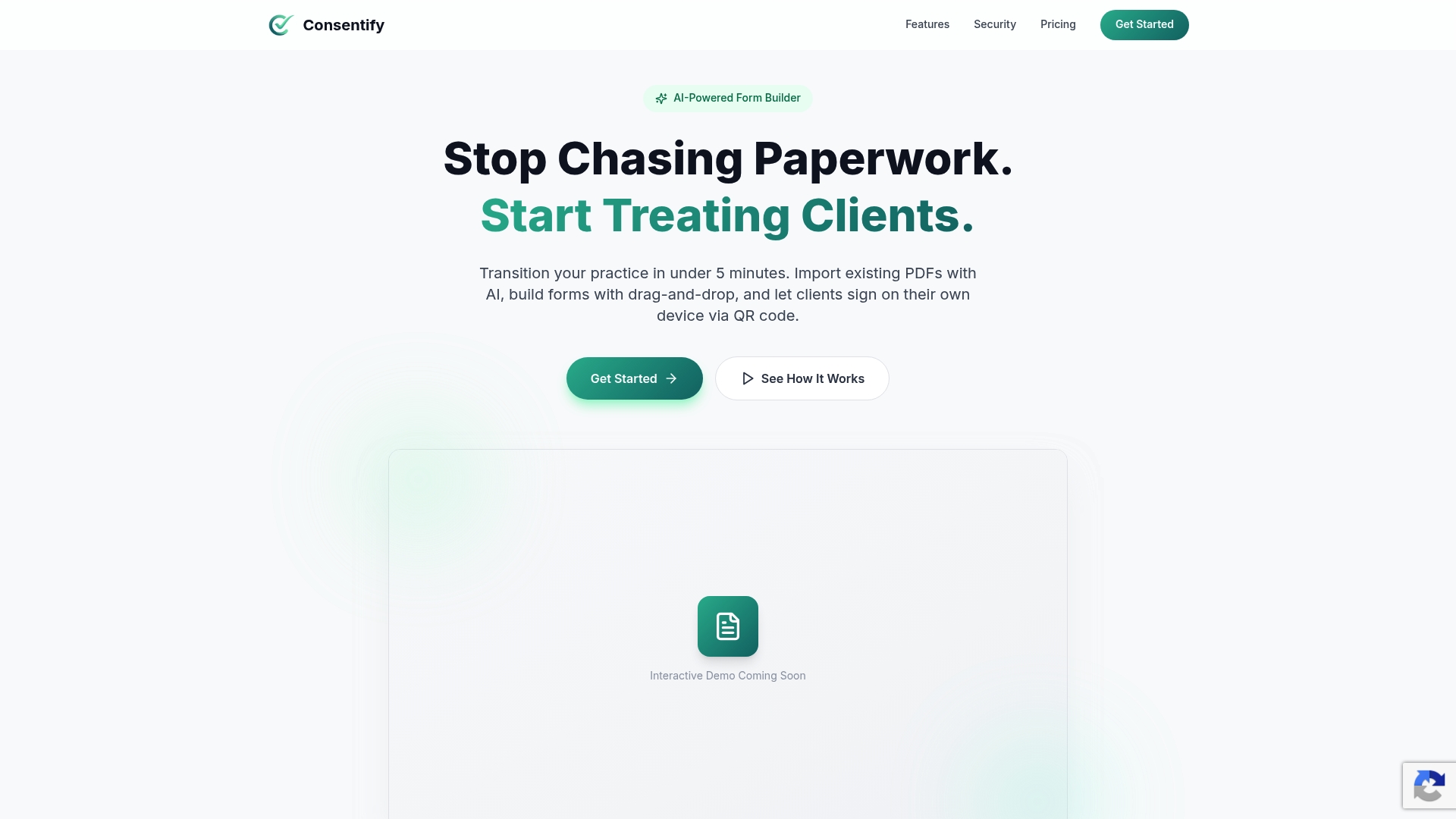
Consentify is built specifically for beauty and wellness businesses. It converts your existing forms into branded digital versions that clients complete on their own phones via QR code, with e-signatures, before-and-after photo capture, and HIPAA-compliant storage built in. No clipboards. No manual data entry. No missing signatures discovered mid-appointment. Visit the beauty salon intake solutions page to see how Consentify fits your salon’s workflow and service types.
FAQ
What fields are required on a salon intake form?
Every salon intake form should include full name, date of birth, contact details, emergency contact, known allergies, relevant medical conditions, and a signed consent to treatment. Cosmetology intake standards also require prior chemical service history and a dated signature for chemical treatments.
Why do salons need client intake forms?
Intake forms protect salons legally, help professionals personalize services, and flag contraindications before treatment begins. Intake forms function as onboarding documents that give the salon team the information needed to provide safe, personalized care.
How often should salon intake forms be updated?
Intake forms should be reviewed and updated at every visit. Client medications, health conditions, and treatment history change over time, and outdated records create liability gaps during audits or disputes.
What is the difference between an intake form and a service record?
An intake form collects disclosures, health history, and consent before treatment. A service record documents what was applied, the products used, and how the client responded. Both are necessary for complete legal documentation.
Do digital intake forms work for high-risk chemical services?
Yes. Digital intake tools like Consentify support e-signatures, dated patch test documentation, and specific risk disclosure fields required for bleach, relaxer, and chemical straightening services. Digital records are also easier to retrieve during audits than paper files.