Why Intake Forms Personalize Beauty Services
Discover why intake forms personalize beauty services, transforming generic treatments into tailored experiences for every client’s unique needs.

Why Intake Forms Personalize Beauty Services

Intake forms are pre-appointment questionnaires that collect client-specific data to enable beauty practitioners to deliver treatments tailored to individual needs, preferences, and health history. The industry term for this process is client consultation, and intake forms are its most structured, scalable tool. Understanding why intake forms personalize beauty services starts with recognizing that no two clients share the same skin type, allergy profile, or service goal. Platforms like GlossGenius and SchedulingKit have made digital intake forms standard practice in salons and spas precisely because the data they collect transforms generic appointments into precise, client-centered experiences.
Why intake forms personalize beauty services
Intake forms reveal client preferences, concerns, and history, allowing practitioners to move beyond generic solutions toward safe, personalized treatments. That shift from one-size-fits-all to tailored care is the core value of every well-designed client consultation form. When your esthetician already knows you have a nickel sensitivity and prefer fragrance-free products before you walk through the door, the entire appointment changes.
The data collected through intake forms falls into three distinct categories. First, preference data captures your style inspirations, service goals, and product likes or dislikes. Second, health and safety data covers allergies, contraindications, skin or hair conditions, and any medications that could affect treatment outcomes. Third, service history data records previous treatments, patch test results, and products currently in use. Together, these three layers give a practitioner everything needed to customize a facial, color service, or body treatment before the appointment begins.

Modern platforms use conditional logic to show relevant fields based on prior answers, so new clients see comprehensive questionnaires while returning clients only update what has changed. This design keeps forms focused and reduces the friction that causes clients to abandon them midway. Dropdown menus, optional fields, and smart branching all contribute to higher completion rates and more accurate data.
Key fields that leading platforms like GlossGenius and SchedulingKit include in their consultation templates are:
- Skin or hair type and current condition
- Known allergies and sensitivities (including fragrance, latex, and dyes)
- Current medications or topical treatments that may cause contraindications
- Previous professional treatments and any adverse reactions
- Service goals and aesthetic preferences (photos or style references welcome)
- Preferred pressure, temperature, or product textures for comfort-based customization
Each field is a data point that replaces guesswork with precision.
How intake forms improve client experience and service quality
Digital intake systems reduce check-in time from 15 to 20 minutes down to under 5 minutes by collecting information before the appointment. That means more of your booked time is spent receiving the actual treatment rather than answering administrative questions at the front desk. For clients paying premium rates, that difference is immediately felt.
The operational benefits extend beyond time savings. When a practitioner reviews your intake form the night before your appointment, they can prepare the exact products, tools, and protocols your profile requires. A client flagged for rosacea gets a different pre-treatment plan than a client with oily, acne-prone skin. This preparation reduces the risk of allergic reactions, unsuitable product applications, and the kind of service errors that damage trust and require corrective appointments.
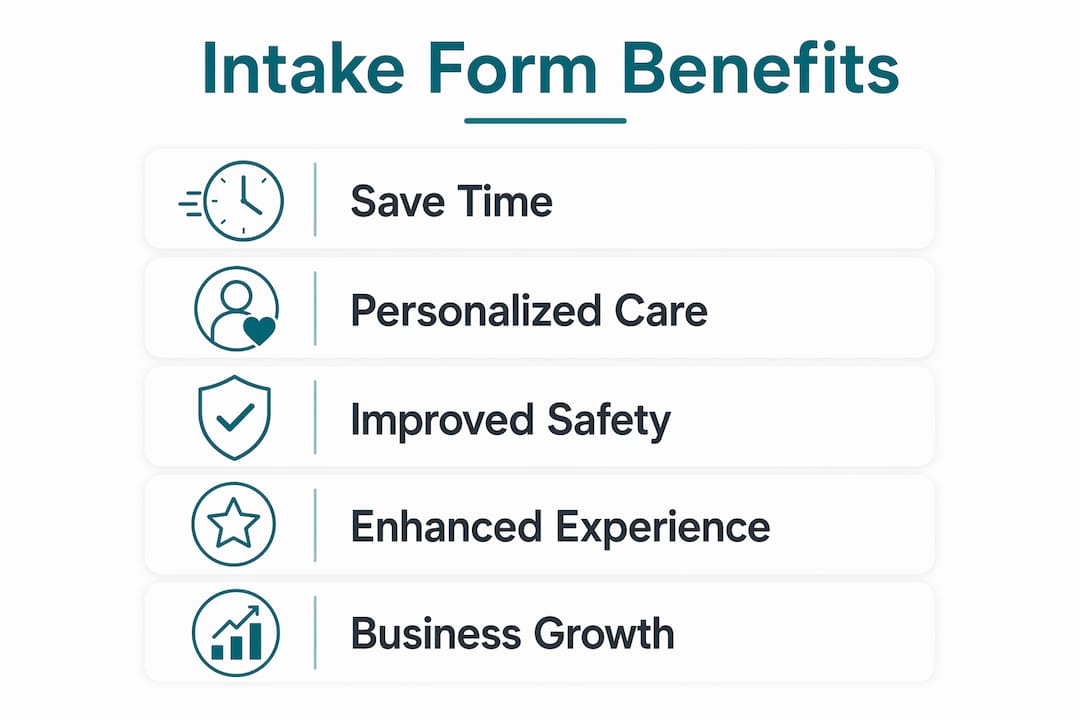
Pro Tip: Fill out your intake form at least 24 hours before your appointment. This gives your practitioner time to review your profile, source any specialized products, and adjust the treatment plan before you arrive.
Personalization builds trust and justifies premium pricing because clients perceive real value in treatments designed specifically for them. A spa that remembers your preference for warm stones over cold compresses, or that your scalp is sensitive to sulfates, earns repeat business without additional marketing spend. The intake form is the mechanism that makes that memory systematic rather than dependent on any single staff member.
Data collected across multiple appointments also allows salons and spas to identify patterns. If 60% of clients booking hydration facials also report dehydrated skin from air travel, the service menu can be updated to include a targeted add-on. This kind of data-driven refinement turns intake forms into a continuous feedback loop that improves service quality over time.
How structured customization via intake forms supports business growth
Structured flexibility in spa packages prevents overwhelming clients while preserving the tailored service experience they expect. The most effective approach is to design base packages with specific modification slots informed by intake data. A client who selects “sensitive skin” on their intake form automatically triggers a protocol swap from a standard enzyme peel to a calming oat-based treatment. No manual intervention required.
The business case for intake-driven customization is direct. Refining service structures and improving intake preparation can increase salon revenue by 20 to 30% without adding new clients or extending hours. That growth comes from higher average ticket sizes, fewer corrective treatments, and stronger client retention. Clients who receive personalized services return more often and refer more frequently.
The table below compares the outcomes of services delivered with and without structured intake forms:
| Factor | Without intake forms | With structured intake forms |
|---|---|---|
| Appointment prep time | Minimal, reactive | Proactive, product-specific |
| Risk of adverse reactions | Higher, based on verbal recall | Lower, documented and reviewed |
| Average ticket size | Standard package pricing | Upsell potential from tailored add-ons |
| Client retention | Dependent on rapport | Systematic, data-supported |
| Service error rate | Higher due to missing history | Reduced through documented contraindications |
Automated scheduling tools integrated with intake platforms, such as SchedulingKit, can trigger inventory alerts when a client’s form indicates a specialty product requirement. This removes the manual step of checking stock before each appointment and reduces the chance of a last-minute substitution that compromises the treatment. The intake form, in this context, is not just a client document. It is an operational trigger that connects client preferences to business logistics.
Intake forms improve onboarding by saving time and reducing errors that lead to miscommunication between clients and practitioners. When expectations are set in writing before the appointment, the likelihood of a client leaving dissatisfied drops significantly.
What are best practices for clients filling out intake forms?
Completing your intake form accurately is the single most direct action you can take to improve the quality of your beauty service. A two-step intake process works best: a brief form at booking captures the essentials, and a detailed questionnaire sent after confirmation collects the full picture. This approach balances thoroughness with convenience.
Follow these steps to get the most from your client consultation form:
- Complete required fields first. Prioritize the fields marked mandatory before moving to optional sections. Required fields are required for a reason, usually safety.
- Be specific about allergies and sensitivities. “Sensitive skin” is not enough. Name the specific ingredients, products, or treatments that have caused reactions in the past.
- List all current topical treatments. Retinoids, acids, and prescription creams can cause contraindications with professional treatments. Your practitioner needs this information to avoid adverse reactions.
- Update your form before each visit. Skin and hair conditions change. A form completed six months ago may not reflect your current health status or product routine.
- Answer honestly, not aspirationally. If you have not been following a skincare routine, say so. Accurate information produces better treatment outcomes than answers you think the practitioner wants to hear.
Pro Tip: If your provider uses a digital intake platform, save your progress and complete the form on a desktop or tablet rather than a phone. Longer forms are easier to read and fill out accurately on a larger screen.
Keeping forms under 10 fields increases completion rates significantly. If your provider’s form feels long, focus on the fields that directly relate to your health and safety first. Those answers protect you. The preference fields improve your experience. Both matter, but safety information is non-negotiable.
When you choose a beauty clinic or spa, the presence of a thorough intake process is itself a quality signal. Providers who ask detailed questions before your appointment are demonstrating a commitment to precision and client safety that generic walk-in services cannot match.
Key takeaways
Intake forms personalize beauty services by converting client-specific data into precise treatment decisions that improve safety, satisfaction, and business outcomes.
| Point | Details |
|---|---|
| Core personalization mechanism | Intake forms collect allergy, preference, and history data that replaces guesswork with precision. |
| Time and safety benefits | Digital forms cut check-in time to under 5 minutes and reduce the risk of adverse reactions. |
| Business growth driver | Structured intake-driven customization can increase salon revenue by 20 to 30% through better retention and upsells. |
| Best completion practice | Use a two-step form process and update your answers before each visit for accurate, current data. |
| Quality signal for clients | A thorough intake process indicates a provider’s commitment to personalized, safe service delivery. |
What I’ve learned from watching intake forms transform client care
The most common mistake I see clients make is treating intake forms as a bureaucratic hurdle rather than a direct line to a better appointment. When someone skips the allergy section or writes “none” without thinking, they are not saving time. They are removing the one safeguard that prevents a practitioner from applying a product that could cause a genuine reaction.
I have seen the difference firsthand between a salon that collects intake data digitally before every appointment and one that relies on verbal check-ins at the desk. The digital-first approach produces a noticeably different quality of service. Practitioners arrive prepared. Products are pre-selected. The client spends the entire appointment being treated, not interviewed.
What surprises most clients is how much a well-designed intake form changes the emotional experience of a service. When your provider references your specific concerns from your form, you feel seen. That feeling is not incidental. It is the direct result of structured data collection done right. Providers who use personalized non-surgical treatment protocols built on intake data consistently report stronger client relationships and higher retention than those who do not.
The technology has made this easier than ever. Platforms that integrate intake forms with booking and client records remove the administrative burden from both sides of the appointment. The form becomes invisible infrastructure. The result is a service that feels personal, not processed.
— Artur
Start your next appointment with a smarter intake process
Your intake form is your digital front door to a better beauty experience. When it works well, your practitioner walks into your appointment already knowing your skin history, your sensitivities, and your goals.
Getconsentify offers AI-powered, customizable digital intake forms built specifically for beauty and wellness providers. Forms integrate directly with booking systems, auto-populate returning client records, and flag contraindications before the appointment begins. Whether you are a client looking for a provider who takes personalization seriously, or a beauty professional ready to upgrade your consultation process, Getconsentify gives you the tools to make every appointment precise, safe, and client-centered. Explore how sending forms before appointments changes the entire service experience.
FAQ
What do intake forms ask in a beauty consultation?
Intake forms in beauty consultations collect allergy and sensitivity data, current medications, skin or hair history, previous treatments, and service preferences. This information allows practitioners to customize treatments and avoid contraindications before the appointment begins.
How do intake forms reduce the risk of adverse reactions?
Consultation forms protect clients by documenting allergies, skin conditions, and contraindications that practitioners review before selecting products or protocols. A documented history is more reliable than verbal recall and reduces the chance of applying an unsuitable treatment.
How often should I update my beauty intake form?
Update your intake form before each appointment, or at minimum every six months. Skin conditions, medications, and product routines change, and an outdated form can lead to a treatment plan that no longer fits your current needs.
Do digital intake forms really save time at appointments?
Digital intake systems reduce check-in time from 15 to 20 minutes down to under 5 minutes by collecting information in advance. That recovered time goes directly into your treatment rather than administrative questions at the front desk.
Can intake forms help me get better results from beauty treatments?
Accurate, detailed intake forms give your practitioner the specific data needed to select the right products, adjust protocols, and set realistic expectations. Clients who complete forms thoroughly consistently receive more targeted treatments than those who provide minimal information.