The Role of Consent Forms in Beauty Treatments
Discover the critical role of consent forms in beauty treatments. Learn how they ensure client safety and legal protection for professionals.

The Role of Consent Forms in Beauty Treatments

Consent forms in beauty and aesthetics are legally binding documents that record a client’s informed agreement before any treatment begins. They are the foundation of ethical practice, not an administrative afterthought. Whether you run a med spa, a salon offering injectables, or a training academy, the role of consent forms in beauty is identical: to confirm that your client understands the procedure, its risks, and their right to refuse. In 2026, with regulatory scrutiny tightening and landmark legal rulings reshaping the industry, getting consent right is no longer optional. Getconsentify exists precisely to make that process accurate, defensible, and efficient for every beauty professional.
What elements must effective beauty consent forms include?
Informed consent is the recognized industry standard for the process of obtaining a client’s voluntary, knowledgeable agreement. The consent form is the written record of that process. Confusing the two is a common and costly mistake. A form that simply says “I agree to the treatment” does not constitute informed consent. The document must demonstrate that the client received specific, relevant information before signing.
Effective consent forms in aesthetics must cover the following:
- Procedure-specific risk disclosures. Generic medical forms weaken legal defensibility because they omit the unique risks of each treatment. A Botox consent form must address bruising, ptosis, and migration. A laser resurfacing form must cover hyperpigmentation, scarring, and photosensitivity. Each procedure demands its own document.
- Realistic outcome expectations. Clients must understand what results are achievable and what is not guaranteed. Overpromising in verbal consultations and then presenting a vague form creates the conditions for disputes.
- Contraindications and medical history. Pregnancy, autoimmune conditions, blood thinners, and recent sun exposure are all contraindications that affect treatment safety. The form must capture this information before the esthetician proceeds.
- Voluntary, coercion-free acknowledgment. Consent obtained under pressure or while a client is medicated can be invalidated in court. The signature line must confirm the client signed freely and without duress.
- Right to withdraw. Clients retain the right to stop any treatment at any time. Stating this explicitly on the form protects both parties.
- Jurisdiction-specific language. States like California require practitioners to comply with the California Business and Professions Code, which mandates specific disclosures for certain aesthetic procedures.
Pro Tip: Have a qualified attorney review your procedure-specific templates. Legal review for aesthetic forms typically takes less than two hours for an experienced attorney in 2026, making it one of the lowest-cost risk management steps available to your practice.
How do legal and ethical frameworks shape consent form use in beauty?
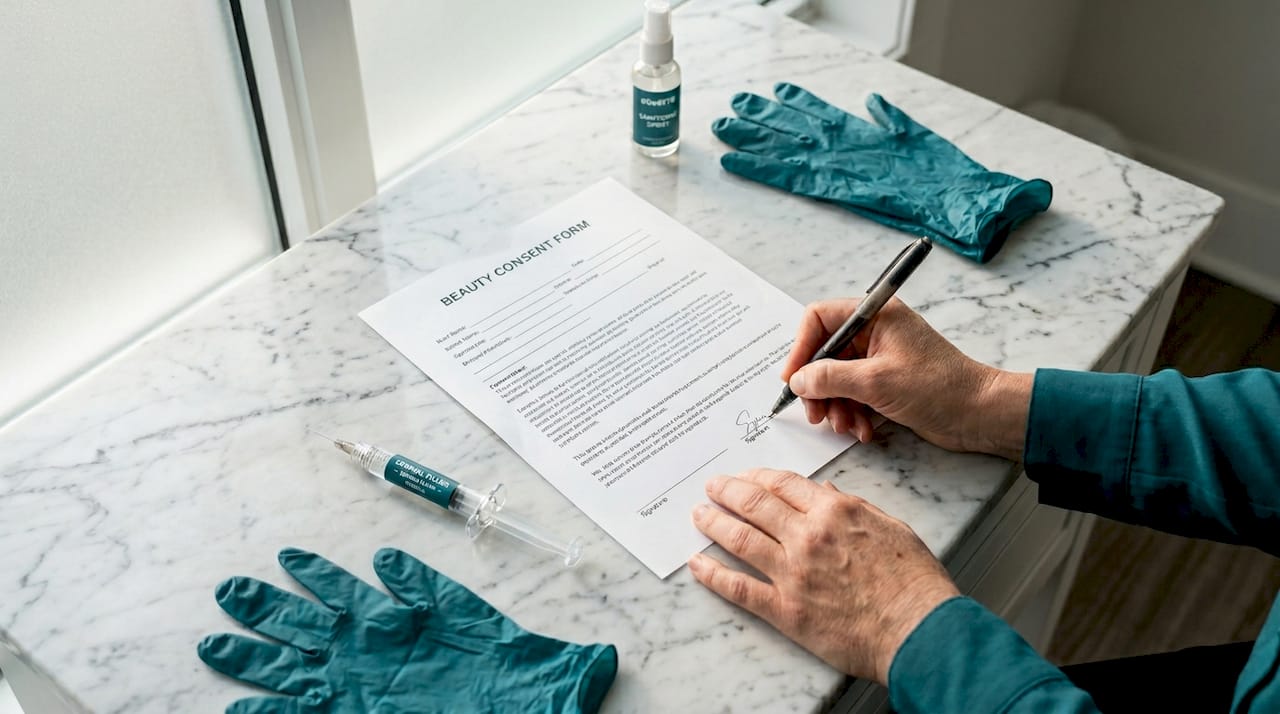
The legal aspects of beauty consent have grown significantly more complex as the line between cosmetic and medical treatments blurs. Regulatory bodies worldwide are drawing clearer distinctions, and the consequences of ignoring them are severe.
A 2026 ruling in Toronto imposed a $22.5 million penalty on a cosmetic clinic that recorded intimate procedures without proper client consent. This ruling signals that consent violations are not minor compliance failures. They are actionable offenses with penalties that can end a business. The case also clarified that consent for one purpose, such as treatment, does not extend to other uses, such as recording or marketing.
Regulatory guidance is also tightening around injectables. India’s government ruled that injectables cannot be marketed as cosmetics, a distinction that directly affects the consent protocols required. A treatment classified as a medical procedure demands a higher standard of informed consent than a surface cosmetic service. This regulatory divide is relevant globally, not just in one jurisdiction.
The table below shows how consent requirements differ across treatment categories:
| Treatment type | Consent standard required |
|---|---|
| Surface cosmetic (facials, waxing, tinting) | Basic client agreement, allergy and patch test disclosure |
| Semi-permanent makeup (microblading, brows) | Procedure-specific risks, healing process, contraindications |
| Medical injectables (Botox, fillers) | Full informed consent, practitioner credentials, medical history |
| Laser and energy-based treatments | Detailed risk disclosure, Fitzpatrick skin type assessment, aftercare |
“Ethical practice in aesthetics demands realistic expectations and comprehensive informed consent at every stage of the client relationship.”: Aesthetic Medicine Professional Standards
The ethical dimension extends beyond paying clients. Student training models must receive the same explicit, transparent, and ongoing consent process as any other client. Using training environments as an excuse to skip proper documentation exposes academies and clinics to the same legal liability as any other consent failure.
Dermatologists consistently warn that unauthorized injectable treatments in salon settings carry serious infection and injury risks. Valid consent forms tied to certified practitioners are the minimum standard for any injectable service, regardless of the setting.
What are best practices for implementing consent forms in beauty businesses?
Knowing what to include in a consent form is only half the job. How you implement, store, and manage those forms determines whether they actually protect your practice. Follow these steps to build a consent process that holds up legally and earns client trust.
- Use procedure-specific templates, not one-size-fits-all documents. A HIPAA-compatible med spa template for Botox is not interchangeable with a laser consent form. Maintain a separate, current template for every treatment category you offer.
- Update templates when regulations change. Regulatory guidance shifts. Review your consent forms at least annually, or whenever a new ruling affects your treatment category. The 2026 injectable marketing restrictions are a clear example of why this matters.
- Adopt a digital consent platform. Paper forms get lost, damaged, or disputed. Digital platforms capture signatures securely, timestamp submissions, and store records in a format that is retrievable for legal review. Getconsentify is built specifically for beauty and clinic environments, with customizable templates and HIPAA-compatible storage.
- Train every staff member on the consent process. A form signed without a genuine informed conversation is legally fragile. Staff must understand that the document records a discussion, not replaces it. This applies equally to selecting the right aesthetic clinic environment where consent culture is embedded from the top down.
- Conduct the consent conversation before the client is on the treatment table. Clients who are already lying down, partially undressed, or feeling social pressure to proceed are in a compromised position to give free consent. The consultation must happen first, in a neutral setting.
- Document the client’s right to withdraw at any time. State this explicitly in the form and verbally during the consultation. Clients who feel locked in are more likely to feel violated if something goes wrong, regardless of the outcome.
Pro Tip: Send consent forms digitally before the appointment. Clients who review forms at home, without time pressure, give more considered consent. This also reduces appointment delays and creates a documented pre-visit record.
How do consent forms benefit clients and practitioners beyond legal protection?
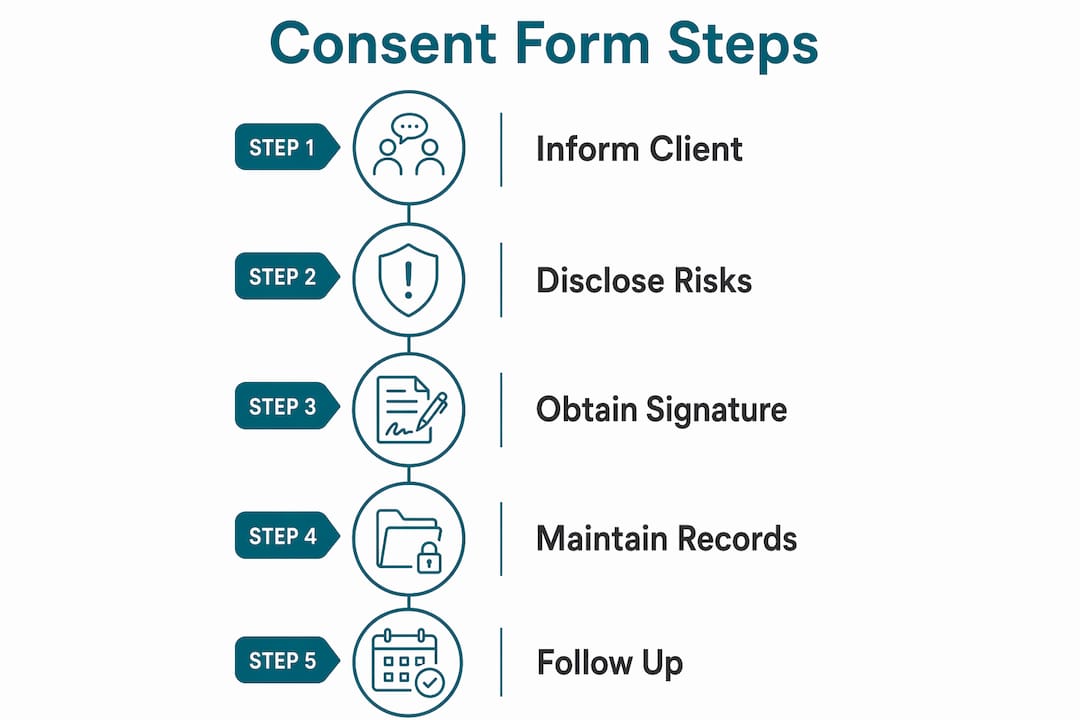
The importance of consent in beauty extends well past legal compliance. When implemented thoughtfully, the consent process actively improves the quality of care and the strength of the client relationship.
For clients, the benefits are direct:
- Transparency builds confidence. Clients who understand exactly what a treatment involves, including realistic recovery timelines and possible side effects, arrive at appointments with accurate expectations. This reduces anxiety and post-treatment dissatisfaction.
- Medical history documentation improves safety. Capturing contraindications, current medications, and allergy history before every treatment allows the practitioner to tailor the service. A client on blood thinners needs a modified approach to microneedling. A client with a history of cold sores needs antiviral prophylaxis before lip filler.
- Documented communication reduces disputes. When a client claims they were never told about bruising after filler, a signed consent form with explicit bruising disclosure resolves the dispute immediately. Without it, the practitioner’s word stands alone against the client’s.
For practitioners, the advantages compound over time:
- Credibility and professional standing. Clinics that follow aesthetic medicine professional standards and document every client interaction signal a higher level of care. This reputation attracts clients who value safety over price.
- Reduced complaints and chargebacks. Clear expectation-setting before treatment directly correlates with fewer post-treatment complaints. Clients who signed a form acknowledging that results vary are less likely to demand refunds when their outcome differs from a social media photo.
- Stronger position in regulatory audits. Regulatory bodies reviewing a practice want to see consistent, complete documentation. A digital record of every client’s consent history demonstrates that your practice takes compliance seriously.
Key takeaways
Consent forms are the legal and ethical backbone of every beauty treatment, protecting clients and practitioners equally when implemented correctly.
| Point | Details |
|---|---|
| Procedure-specific forms are required | Generic consent documents lack the risk disclosures needed for Botox, lasers, and fillers. |
| Legal penalties for consent failures are severe | A 2026 ruling imposed a $22.5 million penalty for recording clients without proper consent. |
| Injectables require medical-grade consent | Regulatory guidance classifies injectables as medical procedures, not cosmetics, raising the consent standard. |
| Digital platforms improve compliance | Secure, timestamped digital consent records are more defensible and accessible than paper alternatives. |
| Consent benefits go beyond legal protection | Documented informed consent reduces disputes, builds client trust, and improves treatment personalization. |
Why consent is a conversation, not a checkbox
By Artur
After working with beauty professionals across clinics, salons, and training academies, the pattern I see most often is this: practitioners treat consent forms as the finish line of the client intake process, when they are actually the starting point of the treatment relationship.
The most common mistake is not a missing signature. It is a form handed over at the reception desk, signed in thirty seconds, and filed without a single word exchanged about its contents. That process satisfies no one. It does not protect the practitioner legally, because a signature obtained without genuine understanding is legally fragile. And it does not serve the client, because they leave the consultation no better informed than when they arrived.
What I have found actually works is treating the consent conversation as a clinical skill, not an administrative task. Practitioners who walk clients through the form verbally, pause at the risk disclosures, and invite questions before asking for a signature report fewer post-treatment complaints and stronger client retention. The form becomes evidence of a real conversation, and that is exactly what makes it defensible.
Technology helps, but it does not replace the conversation. Digital consent platforms like Getconsentify remove the friction of paper storage and make records retrievable in seconds. Sending forms before the appointment gives clients time to read without pressure. But the practitioner still needs to confirm understanding in person. The form and the conversation work together. Neither works alone.
The beauty industry is moving toward higher standards, not lower ones. The 2026 rulings and regulatory updates covered in this article are not isolated events. They are signals of a sustained shift toward accountability. Practitioners who build consent into their culture now will be ahead of that shift, not scrambling to catch up.
— Artur
Manage consent forms with Getconsentify
Getconsentify is a digital consent form platform built specifically for beauty and clinic professionals. You get customizable, procedure-specific templates covering treatments from Botox and fillers to laser resurfacing and microblading. Every form is stored securely with timestamps and digital signatures, giving you a HIPAA-compatible record that holds up in any legal or regulatory review. Clients can complete forms before their appointment, reducing chair time and improving the quality of their consent. If you are ready to replace paper chaos with a system that actually protects your practice, start with Getconsentify today.
FAQ
What is the role of consent forms in beauty treatments?
Consent forms in beauty treatments are legal documents that record a client’s informed agreement before a procedure begins. They confirm the client understands the risks, expected outcomes, and their right to withdraw at any time.
Are consent forms legally required for all beauty services?
Requirements vary by jurisdiction and treatment type, but medical-grade procedures like injectables legally require formal informed consent in most regions. Surface cosmetic treatments still benefit from documented client agreement to reduce disputes.
What makes a beauty consent form legally defensible?
A legally defensible form is procedure-specific, captures voluntary and coercion-free consent, discloses relevant risks and contraindications, and is stored with a timestamp and verifiable signature. Generic forms that lack procedure-specific disclosures are the most common point of legal weakness.
Do student training models need consent forms?
Yes. Ethical training standards require that student models receive the same explicit, ongoing consent process as paying clients. Skipping documentation in training environments carries the same legal exposure as any other consent failure.
How do digital consent forms improve compliance for beauty businesses?
Digital platforms capture signatures with timestamps, store records securely, and allow clients to review forms before appointments without time pressure. This creates a more complete and accessible record than paper forms, which are easily lost or disputed.