Digital Brow Tinting Consent: Your Complete Form Guide
Discover how a digital form brow tinting consent protects you and your esthetician. Learn the essentials for client safety and compliance.

Digital Brow Tinting Consent: Your Complete Form Guide

A digital form for brow tinting consent is a legally binding electronic document that records your informed permission and health disclosures before any tinting procedure begins. Unlike a paper waiver you scribble on at the front desk, a properly structured electronic brow tint consent form captures your medical history, contraindications, and risk acknowledgment in a secure, retrievable format. Platforms like Getconsentify have made this process standard practice for salons that prioritize both client safety and regulatory compliance. Getting this form right protects you and your esthetician from the moment you book.
What must a digital brow tinting consent form include?
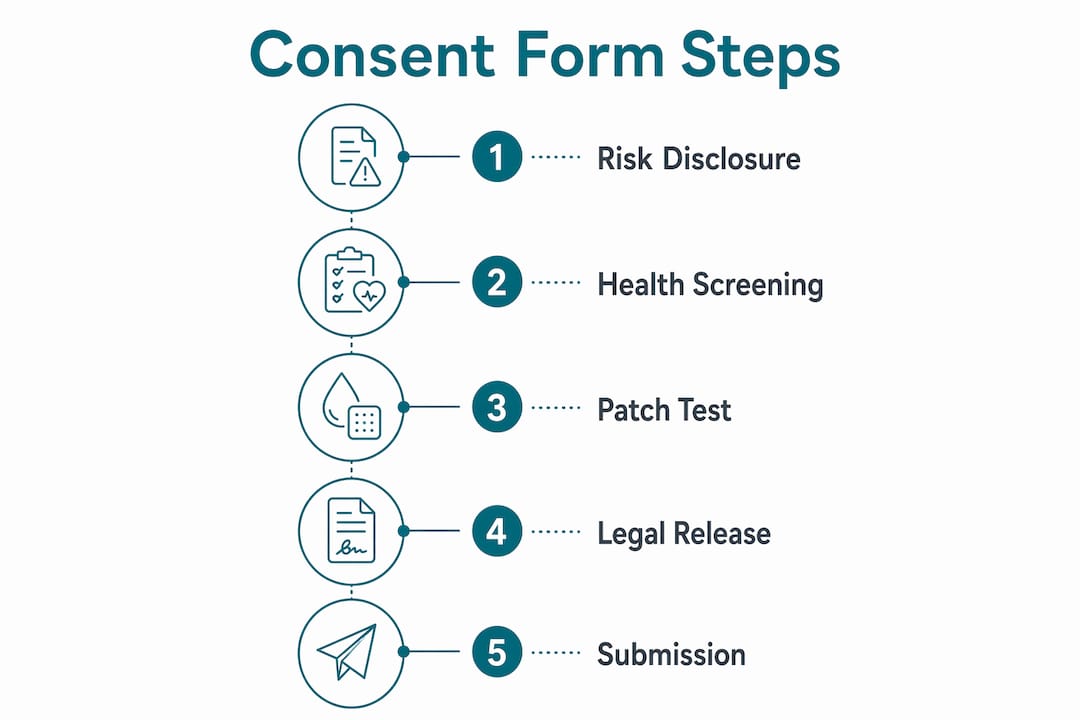
A complete brow tinting client agreement covers four core areas: risk disclosures, health screening questions, patch test documentation, and a legal release clause. Each section serves a specific protective function. Skipping any one of them creates gaps that can delay your treatment or expose both parties to liability.
Risk disclosures you should expect to see
Tinting risk disclosures must transparently state potential eye irritation, staining, and rare but serious adverse effects, including the possibility of blindness if tint enters the eye. That last point surprises most clients, but it is a real risk that any credible eyebrow tinting liability form will name explicitly. Reading this section carefully is not optional. It is the foundation of your informed consent.
Your form should also disclose the likelihood of unsatisfactory color results, skin staining around the brow area, and temporary redness. These are common outcomes, not rare ones. Knowing them in advance means you can set realistic expectations before the appointment.
Health screening: what you must disclose
The health screening section of a brow tinting permission form asks about conditions that directly affect how your skin reacts to tint. Clients using Botox, retinoids, or lash-growth serums like Latisse require special screening because these treatments alter skin sensitivity and can cause unpredictable reactions or delayed healing. If you have had any of these treatments recently, disclose them. Your esthetician cannot protect you from a reaction they do not know to look for.

The form will also ask about known allergies, skin conditions like eczema or psoriasis, and recent cosmetic procedures. Answer every question honestly. Incomplete answers are the most common reason treatments get postponed on the day of the appointment.
Patch test documentation
Many state boards require a patch test 24–48 hours before tinting to reduce allergic reaction risks. Your digital consent form should include a section where you confirm whether a patch test was performed and whether you experienced any reaction. Patch tests are the most overlooked yet critical step in preventing adverse outcomes, according to industry guidance updated in April 2026.
Pro Tip: If your salon does not offer a patch test before your first brow tinting appointment, ask for one. A reputable practitioner will always document your consent or refusal in writing, because that record is their liability shield.
Legal release clause
The release clause is the section where you formally acknowledge the disclosed risks and release the practitioner from liability for outcomes that fall within those disclosed risks. This is standard in any professional brow tinting waiver. Read it before you sign. If any language is unclear, ask your esthetician to explain it before the appointment proceeds.
Digital vs. paper: which consent form works better?
Digital consent forms improve efficiency and compliance compared to paper, but they require secure platforms and thoughtful client access. The comparison below shows where each format wins and where it falls short.
| Feature | Digital Form | Paper Form |
|---|---|---|
| Completion location | Home, phone, or tablet before arrival | In salon only |
| Storage and retrieval | Instant, searchable, cloud-based | Manual filing, risk of loss |
| Signature validity | Legally binding e-signature | Handwritten signature |
| Data security | Requires HIPAA-aware platform | Physical security only |
| Update and revision | Instant across all future clients | Reprint required |
| Environmental impact | Zero paper waste | Paper and ink costs |
The practical advantage of online brow tinting consent is speed. You complete the form before you arrive, which means your appointment starts on time. For salons running back-to-back bookings, that efficiency matters. For you as a client, it means you have time to read the form carefully at home rather than rushing through it at the front desk.
The one legitimate concern with digital formats is data security. Your health disclosures are sensitive information. Platforms that handle digital consent forms with e-signatures for salons should use encrypted storage and access controls. If you are unsure about a platform’s security practices, ask your salon which system they use and whether it complies with applicable data protection standards.
How to complete a digital brow tinting consent form correctly
Filling out an electronic brow tint consent form takes about five minutes when you know what to expect. Follow these steps to get it right the first time.
- Access the form through the link your salon sends. Most salons using digital intake systems send a link via email or SMS before your appointment. Open it on your phone or computer. Do not wait until you are in the chair.
- Read the risk disclosure section in full. Do not scroll past it. This section names the specific risks of brow tinting, including eye irritation, allergic reactions, and color results. Clients who understand and accept risks via detailed consent forms build stronger trust with their practitioners and reduce legal exposure for both parties.
- Answer every health question honestly. The form will ask about allergies, skin conditions, medications, and recent treatments. Incomplete answers are the leading cause of treatment delays. If you are unsure whether a medication is relevant, list it anyway and let your esthetician decide.
- Confirm your patch test status. If you have had a patch test within the required 24–48 hour window, confirm it in the form. If you have not, contact your salon before your appointment to schedule one.
- Review the legal release clause before signing. Understand what you are agreeing to. The release covers outcomes within the disclosed risk range. It does not waive your rights in cases of practitioner negligence.
- Apply your digital signature. Most platforms use a typed name, drawn signature, or click-to-sign method. All three are legally binding when the platform meets electronic signature standards.
- Ask questions before you submit. Client guidance and FAQs improve understanding and reduce incomplete submissions. If any section is unclear, call or message your salon before you sign.
Pro Tip: Screenshot or save a copy of your completed form before you submit it. Most platforms send a confirmation email, but having your own copy gives you a reference point if questions arise later.
Common mistakes when using brow tinting consent forms
Most problems with digital eyebrow tint release forms come down to a handful of avoidable errors. Knowing them in advance saves you time and keeps your appointment on track.
- Submitting an incomplete form. Leaving health questions blank or skipping sections triggers a review flag in most salon systems. Your appointment may be paused until the form is complete. Fill out every field, even if the answer is “none” or “not applicable.”
- Ignoring the patch test requirement. States vary in mandating patch tests, but performing and documenting them is best practice and legally prudent. Skipping this step and then experiencing a reaction creates a dispute with no documentation to support either side.
- Misreading the risk statements. Risk disclosures are written in plain language for a reason. If a statement says “rare but serious adverse effects,” that means the risk is low but real. Do not dismiss it. Do not assume it applies only to other people.
- Failing to update your form when your health changes. If you start a new medication, have a cosmetic procedure, or develop a new allergy between appointments, update your consent before your next tinting session. Re-tinting is typically needed every 3–4 weeks, so health changes between visits are common and consequential.
- Technical issues with digital signatures. If the signature field does not respond, try a different browser or clear your cache. Most platforms support Chrome, Safari, and Firefox. If the problem persists, contact your salon and ask for an alternative access method.
Understanding the role of consent forms in beauty treatments helps you approach the process with the right mindset. These forms exist to protect you, not to create paperwork.
Key takeaways
A properly completed digital brow tinting consent form protects your safety, documents your health disclosures, and creates a legally binding record that benefits both you and your practitioner.
| Point | Details |
|---|---|
| Complete every section | Incomplete forms delay treatment and create liability gaps for both client and practitioner. |
| Patch test is non-negotiable | Schedule your patch test 24–48 hours before the appointment and confirm it in the form. |
| Disclose all recent treatments | Botox, retinoids, and Latisse use must be disclosed to prevent adverse skin reactions. |
| Digital forms outperform paper | Electronic consent offers faster completion, better storage, and legally valid e-signatures. |
| Update your form between visits | Health changes between 3–4 week re-tinting appointments must be reflected in a new consent. |
Why i think most clients underestimate the consent form
After working closely with beauty and wellness professionals for years, I have noticed a consistent pattern. Clients treat the consent form as an obstacle between them and their appointment. They rush through it, skip sections, and sign without reading. That approach is a mistake, and not just for legal reasons.
The consent form is the one moment in the appointment where you have full control. It is where you tell your practitioner exactly what they need to know to do their job safely. When clients skip the health screening section, they are not saving time. They are removing the safety net that the entire treatment process depends on.
I have also seen the other side of this. When clients arrive having read their form carefully, the consultation is faster, more focused, and more productive. The esthetician already knows your contraindications. You already understand the risks. The appointment starts with trust already established.
Intake forms that improve consultations are not just an administrative tool. They are the foundation of a professional client relationship. Treat your brow tinting consent form with the same attention you give to choosing your esthetician. Both decisions affect the outcome of your treatment.
— Artur
Get your brow tinting consent forms right with Getconsentify
Getconsentify builds digital intake forms specifically for beauty and wellness professionals. Every template is designed to cover the disclosures, health screening questions, and legal release language that brow tinting services require.
Clients complete their beauty salon consent forms before they arrive, sign electronically, and receive an automatic confirmation. Salons get a secure, searchable record with no paper filing required. Customizable templates mean your forms reflect your brand and your specific service menu. If you want consent forms that work as hard as you do, Getconsentify is built for exactly that.
FAQ
What is a digital brow tinting consent form?
A digital brow tinting consent form is an electronic document that records your informed permission, health disclosures, and risk acknowledgment before a brow tinting procedure. It carries the same legal weight as a paper waiver when signed through a compliant e-signature platform.
Is a patch test required before brow tinting?
Many state boards require a patch test 24–48 hours before tinting, and industry guidance treats it as best practice regardless of state mandate. Your consent form should document whether the patch test was completed or declined.
What health conditions must i disclose on a brow tinting form?
You must disclose known allergies, skin conditions, and recent use of Botox, retinoids, or lash-growth serums like Latisse, as these treatments increase sensitivity and can cause adverse reactions during tinting.
How often do i need to complete a new consent form?
Most salons require a new or updated brow tinting client agreement whenever your health information changes. Since brow tinting typically requires re-tinting every 3–4 weeks, reviewing your form at each visit is a practical standard.
Are digital brow tinting consent forms legally binding?
Yes. Electronic signatures on digital consent forms are legally binding under the Electronic Signatures in Global and National Commerce Act (E-SIGN Act) when the platform meets applicable standards. Always confirm your salon uses a compliant platform.