Types of Scarification Consent Forms: 2026 Guide
Discover the essential types of scarification consent forms in our 2026 guide. Ensure safety and compliance in your body modification practice.

Types of Scarification Consent Forms: 2026 Guide

Scarification consent forms are specialized legal documents that confirm a client understands the permanent risks of body modification and gives informed permission before any procedure begins. Unlike a standard tattoo waiver, these forms address tissue removal, controlled skin damage, and healing outcomes that vary from person to person. The types of scarification consent forms you use directly affect your legal protection, your client’s safety, and the professional standard of your practice. This guide breaks down every major form type, what each one must contain, and how to stay compliant across U.S. states in 2026.
Key elements included in scarification consent forms
Every scarification consent form, regardless of type, must cover a defined set of disclosures. These are not optional. They protect both the client and the artist if a dispute arises.
The core disclosures every form needs:
- Permanent risk acknowledgment. Risks include permanent scarring, nerve damage, infection, and disfigurement. Clients must confirm they understand these outcomes before the session begins.
- Healing variability clause. Scar tissue forms differently in every body. Artists disclaim guarantees on final scar appearance to limit liability on aesthetic outcomes.
- Aftercare instructions and client responsibilities. The form must state what the client is required to do post-procedure. Failure to follow aftercare is a leading cause of complications.
- Dynamic and ongoing consent. Consent is not a one-time signature. Written forms serve as a foundation, but verbal check-ins throughout the session allow the client to withdraw at any point without penalty.
- Privacy and media release. Scarification journeys are frequently documented. Forms must include clauses that clarify who owns photos or videos taken during or after the procedure.
- Artist credentials acknowledgment. The client should confirm they have reviewed the artist’s training in sterile technique and anatomy, as well as their portfolio and documented healing outcomes.
Pro Tip: Add a reflection period clause that requires clients to wait at least 48 hours after the consultation before signing the final procedure consent. Scars never fully disappear, and that waiting period reduces impulsive decisions and future disputes.
1. Types of scarification consent forms and their specific purposes
Scarification informed consent is not a single document. Professionals use several distinct form types, each serving a specific stage of the client relationship.
Initial consultation and medical history intake form
This is the first document a client completes. It captures medical history, contraindications such as keloid-prone skin or blood clotting disorders, current medications, and allergy disclosures. It also establishes whether the client has had prior body modifications and how they healed. This form does not authorize any procedure. It informs the artist whether the client is a safe candidate.

Procedure-specific consent form
This form is tailored to the exact method being used: cutting, branding, or abrasion. Each technique carries different risks. Branding involves heat and carries a higher infection risk than cutting. Abrasion removes surface skin layers and requires specific aftercare. A generic consent to treat waiver does not cover these distinctions. The procedure-specific form must name the technique, describe the tissue impact, and list the method-specific risks in plain language.
Pre-procedure affirmation form
Professionals use a multi-stage consent process that includes a pre-session affirmation completed on the day of the appointment. This short document confirms the client’s physical and mental readiness has not changed since the initial consultation. It accounts for factors like illness, medication changes, or second thoughts. Signing this form immediately before the session closes the gap between initial consent and the actual procedure.
Dynamic consent record
This is not always a printed form. It is a documented record of verbal check-ins conducted during the session. The artist notes the time and the client’s confirmed agreement to continue at key points. This record is critical if a client later claims they felt pressured or were unable to stop the procedure.
Stop-signal and emergency protocol form
In kink or BDSM contexts, explicit stop-signal clauses are required in consent forms. These clauses define the agreed signal for immediately pausing or ending the session. They also outline the emergency response protocol if a client experiences physiological or psychological distress. This form type is not exclusive to kink contexts. Any scarification practice benefits from a written emergency protocol.
Artist portfolio and training verification form
This form requires the client to confirm they have reviewed the artist’s portfolio, including healed scar photos, and that they understand the artist’s specific training in sterile technique and anatomy. Verification of artist credentials is a precondition for genuine informed consent. Without it, the client cannot make a fully informed decision about risk.
Minor age verification and parental consent form
Scarification is legal in all 50 U.S. states, but many states ban the procedure on clients under 18 regardless of parental consent. Minnesota is one example. This form documents the client’s verified age and, where applicable, captures parental or guardian consent. Artists must check their state’s specific age threshold before relying on this form alone.
2. How scarification consent forms differ from other body modification forms
Scarification consent forms require more detailed disclosures than standard tattoo or piercing waivers. The difference is not cosmetic. It reflects a fundamentally different level of tissue impact.
| Feature | Scarification forms | Tattoo and piercing forms |
|---|---|---|
| Tissue impact disclosure | Skin removal or controlled damage | Ink deposit or puncture |
| Healing variability clause | Required. Outcomes vary biologically | Rarely included |
| Infection risk level | Higher. Open wounds, longer healing | Lower. Faster closure |
| Emergency protocol | Recommended for all procedures | Uncommon |
| Privacy and media release | Standard inclusion | Optional |
| Procedure-specific variants | Cutting, branding, abrasion | Limited variation |
The unique risks of skin removal and healing mean that a tattoo waiver used for scarification creates a significant legal gap. Courts and health departments treat these procedures differently. Your forms must reflect that distinction. For a detailed comparison of consent requirements across body modification types, the body modification consent guide from Consentify is a practical reference.
Pro Tip: Review your state’s health department regulations annually. Scarification licensing requirements change, and a form that was compliant last year may not meet current standards.
3. Legal and regulatory considerations across U.S. states
Scarification is legal in all 50 U.S. states, but the regulatory framework varies significantly by jurisdiction.
| Regulatory area | Common requirement |
|---|---|
| Age restrictions | Most states prohibit scarification on clients under 18 |
| Artist licensing | Many states require permits issued by the health department |
| Facility permits | Studios often need a separate facility inspection and permit |
| Parental consent | Some states allow it for minors; others prohibit the procedure entirely under 18 |
| Ongoing consent standard | Ethical and increasingly legal standard in most jurisdictions |
The most important takeaway from this table is that your consent form must reflect your specific state’s rules. A form built for California may not satisfy Minnesota’s age restriction requirements. Ethical practices in scarification require legal age verification as a non-negotiable step, not an afterthought. Artists who skip this step face both legal liability and professional consequences.
State health departments are the primary regulatory authority for scarification artists. Check with your state’s department directly to confirm current licensing and permit requirements before finalizing your consent form template.
4. Best practices for creating and using scarification consent forms
A well-designed scarification consent template does more than check a legal box. It sets the tone for the entire client relationship.
- Use a multi-stage process. An initial consultation form, a procedure-specific consent, and a pre-session affirmation together create a complete record of informed consent at every stage.
- Write in plain language. Clients must understand what they are signing. Replace legal jargon with direct descriptions of risks and outcomes.
- Include explicit privacy policies. State clearly who owns photos taken during the session and under what conditions the artist may share them.
- Document stop-signal agreements. Whether or not the context is kink-related, a written emergency protocol protects both parties.
- Verify artist credentials in writing. Require the client to confirm they have reviewed the artist’s portfolio and training documentation before signing any procedure consent.
- Use a digital platform for record management. Paper forms get lost, damaged, or altered. Digital records with audit logs provide tamper-proof documentation.
Pro Tip: Consentify’s AI converts your existing PDF consent forms into digital versions clients can complete on their own devices via QR code. This removes the paper trail problem and keeps every signed form stored securely with a timestamped audit log.
Key takeaways
Scarification consent forms require multiple distinct document types, each covering a specific stage of the procedure, because no single waiver can address the full scope of risks, legal requirements, and ongoing consent obligations involved.
| Point | Details |
|---|---|
| Multiple form types are required | Use consultation, procedure-specific, pre-session, and dynamic consent records together. |
| Healing variability must be disclosed | Include a clause acknowledging that scar outcomes differ biologically and cannot be guaranteed. |
| State laws vary significantly | Confirm your state’s age restrictions and licensing requirements before finalizing any template. |
| Dynamic consent is a legal standard | Document verbal check-ins during sessions to supplement the written agreement. |
| Digital records outperform paper | Timestamped, encrypted digital forms provide stronger legal protection than paper waivers. |
Why consent forms in scarification are more than paperwork
I have reviewed hundreds of consent forms across tattoo studios, body modification practices, and medical aesthetics settings. The most consistent mistake I see is treating the consent form as a liability shield rather than a communication tool.
Scarification is permanent. The client sitting across from you is making a decision they will live with for the rest of their life. A form that buries the risks in legal language, skips the healing variability clause, or omits a stop-signal protocol is not protecting anyone. It is creating a false sense of security for the artist and leaving the client underprepared.
The shift I have seen in the best practices over the past several years is toward multi-stage consent. The initial consultation, the pre-session affirmation, and the dynamic check-ins during the procedure are not bureaucratic overhead. They are the difference between a client who feels informed and respected and one who feels railroaded. That distinction matters in court, and it matters even more in the chair.
The legal landscape is also tightening. More states are formalizing licensing requirements for scarification artists, and health departments are beginning to audit consent documentation more closely. Artists who built their practice on a single generic waiver are going to find that form inadequate. The time to build a proper consent process is before a complaint is filed, not after.
My honest recommendation: treat your consent forms as a living document set. Review them every year, check your state’s current regulations, and update your templates accordingly. A digital intake platform makes that update process far less painful than reprinting and redistributing paper forms.
— Artur
Consentify for scarification artists: digital consent that holds up
Managing multiple consent form types across every client is a real operational challenge for scarification artists. Consentify replaces paper-based intake with a digital system built for body modification professionals.
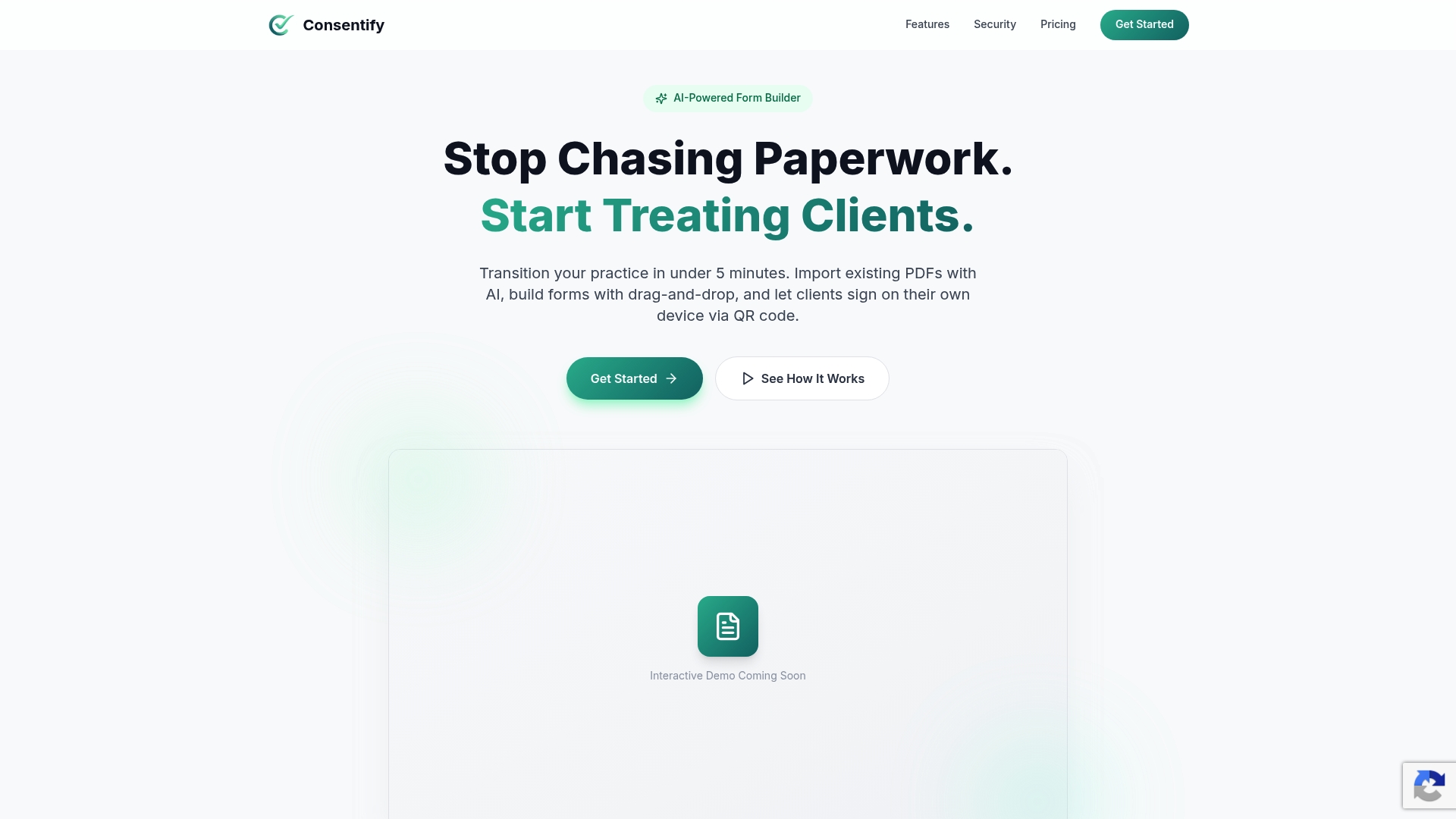
Clients complete and sign their forms on their own devices using a QR code, before they even sit down. Consentify’s AI converts your existing PDFs into editable digital forms, so you keep your current templates without starting from scratch. Every signed document is stored with military-grade encryption and a tamper-proof audit log, giving you a defensible record if a dispute arises. For artists managing multi-stage consent processes, Consentify handles the sequencing automatically. See how it works for tattoo and scarification studios and get your forms compliant today.
FAQ
What is a scarification consent form?
A scarification consent form is a legal document confirming a client understands the permanent risks of the procedure, including scarring, nerve damage, and infection, and gives informed permission before work begins.
How many types of scarification consent forms do I need?
Most professional practices use at least four: an initial consultation and medical history form, a procedure-specific consent, a pre-session affirmation, and a dynamic consent record completed during the session.
Are scarification consent forms legally required?
Scarification is legal in all 50 U.S. states, and while specific consent form mandates vary by state, health departments widely require documented informed consent as part of licensing compliance.
Can a standard tattoo waiver cover scarification?
No. Scarification requires granular disclosures about tissue removal, healing variability, and infection risk that a standard tattoo waiver does not address. Using a tattoo waiver for scarification creates a significant legal gap.
What should a scarification consent template include for minors?
Most states prohibit scarification on clients under 18 regardless of parental consent. Your template must include verified age documentation, and you must confirm your state’s specific age threshold before accepting any minor client.