Chemical Peel Consent Form: What Patients Need to Know
Learn what is a chemical peel consent form and why it’s essential for your treatment. Understand your rights and ensure safe care.

Chemical Peel Consent Form: What Patients Need to Know

A chemical peel consent form is a legal and medical document that records a patient’s informed agreement to undergo a chemical peel procedure after receiving full disclosure of its risks, benefits, and aftercare requirements. Known formally as an informed consent document, this form protects both the patient and the provider. It is not a formality. It is the foundation of a safe treatment experience, and understanding what it contains before you sign puts you in control of your own care.
What is a chemical peel consent form required to include?
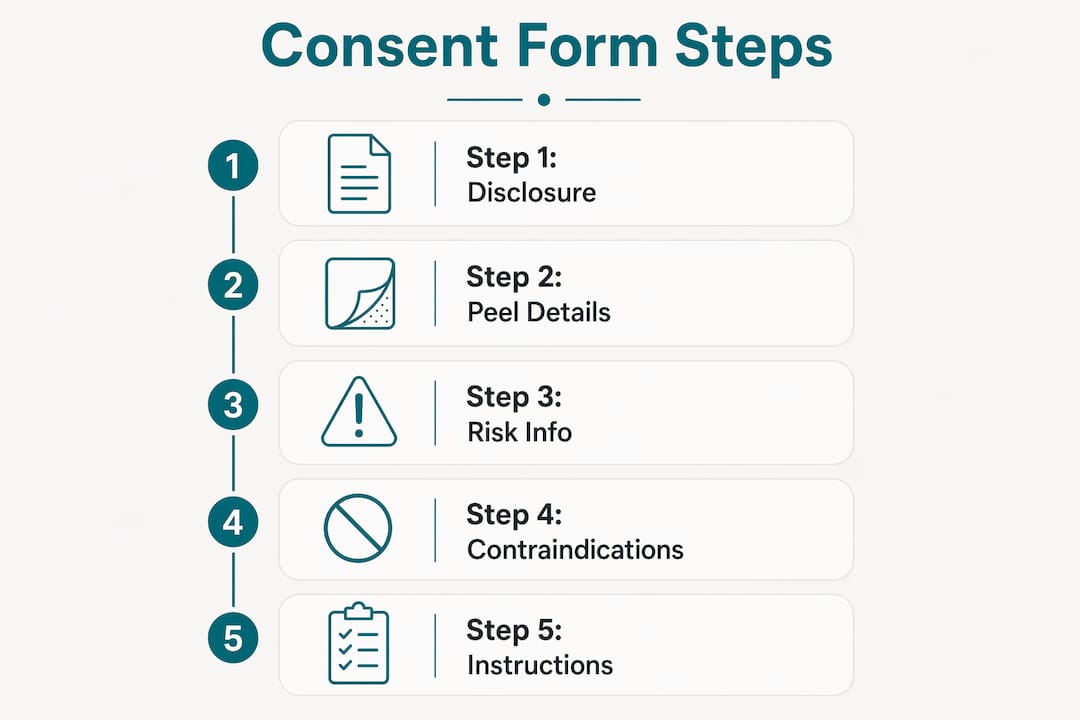
A proper chemical peel consent form covers far more than a basic description of the treatment. 2026 industry standards require the form to clearly identify the peel type, chemical agent, concentration, and depth classification. Each of those details carries different risk profiles, and your form should reflect them specifically.
Peel type and depth
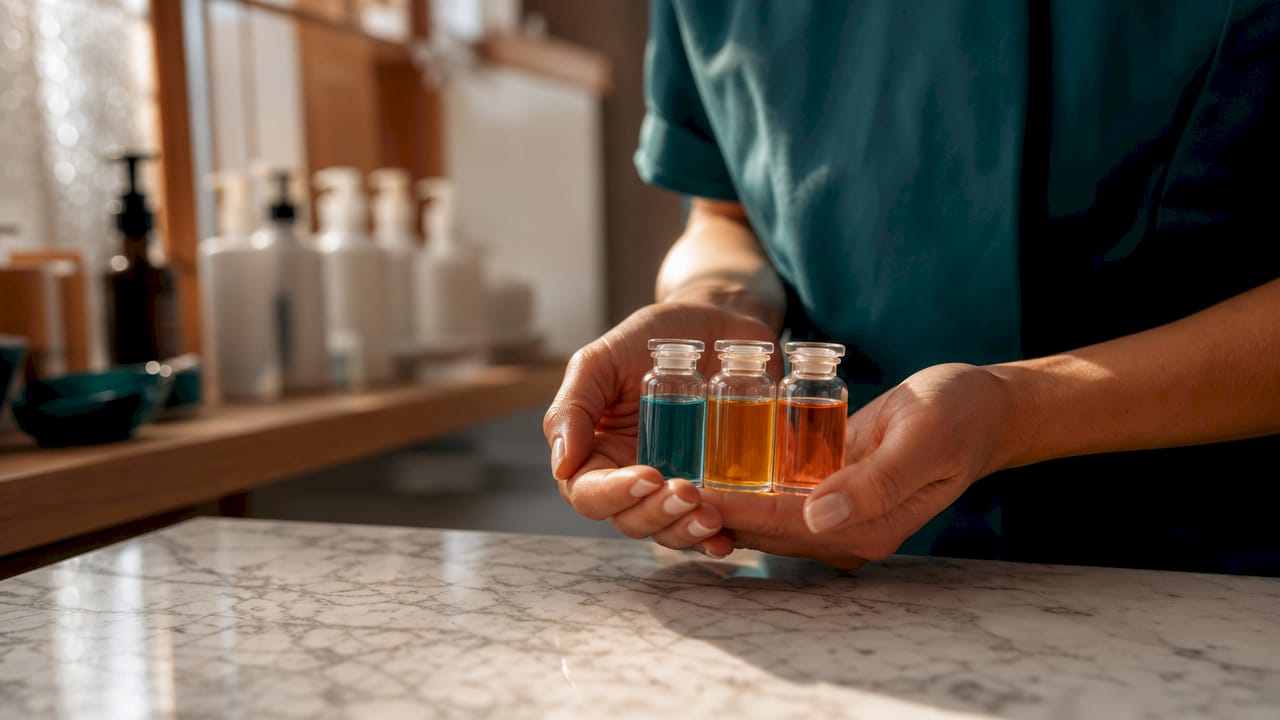
Chemical peels fall into three depth categories: superficial, medium, and deep. Superficial peels use agents like glycolic acid or salicylic acid and carry minimal downtime. Medium-depth peels, often using trichloroacetic acid (TCA), cause several days of peeling and redness. Deep peels, such as phenol peels, require longer recovery and carry the highest risk. Your consent form must state which category applies to your treatment.
Risk disclosures
The form must list all known risks in plain language. Common disclosures include:
- Hyperpigmentation (darkening of treated skin, especially in deeper skin tones)
- Hypopigmentation (permanent lightening of skin in the treated area)
- Herpes simplex activation (cold sore outbreaks triggered by peel trauma)
- Scarring (rare but possible with medium and deep peels)
- Prolonged redness or sensitivity
- Infection risk if aftercare instructions are not followed
A form that omits herpes simplex protocols, for example, is incomplete by current standards. Prophylactic protocols for herpes simplex must be addressed, particularly for patients with a history of cold sores.
Pre- and post-treatment instructions
Pre- and post-treatment instructions must appear in the consent form, not just in a separate handout. Pre-treatment requirements typically include stopping retinoids or Retin-A at least five to seven days before the procedure, avoiding recent sun exposure, and disclosing any active skin conditions. Post-treatment care includes daily SPF use, avoiding picking or peeling skin manually, and staying out of direct sunlight during healing.
Contraindications
The form must document contraindications that would make the procedure unsafe. Pregnancy is an absolute contraindication for most chemical peels. Recent isotretinoin (Accutane) use, active eczema or psoriasis in the treatment area, and recent radiation therapy are also standard exclusions. You should disclose your full medical history and current medications before signing.
Pro Tip: Ask your esthetician or provider to walk you through each contraindication listed on the form. If you are unsure whether a medication you take affects your eligibility, request a consultation before your appointment.
Why is the chemical peel consent form important legally and medically?
Informed consent is a legal and ethical process of ensuring patient understanding, not simply obtaining a signature. That distinction matters enormously. A signed form without a verbal explanation may not hold up as legally sufficient if a patient later claims they did not understand the risks.
“The signature records consent but does not replace the necessary two-way dialogue for true informed consent.”: PMC, National Library of Medicine
This principle has real consequences. Weak or generic consent forms increase provider liability when outcomes do not meet patient expectations. A patient who experiences hyperpigmentation after a TCA peel and claims they were never told about that risk has a much stronger legal case if the form was vague or non-specific.
From the patient side, the consent form is your primary protection too. It confirms that the provider disclosed the procedure’s risks before you agreed. If a provider cannot or will not give you a detailed, procedure-specific form, that is a warning sign worth taking seriously.
The medical importance is equally clear. A 2025 quality improvement study found that targeted consent forms and education interventions reduced the proportion of uninformed patients about chemical peel risks from 37.5% to 10%. That is a significant reduction in preventable harm, achieved simply by improving the quality of the consent process.
Informed consent is a dynamic process requiring health professionals to confirm that patients understand benefits, risks, and alternatives before treatment begins. The form documents that process. It does not replace it.
How should you prepare before signing a chemical peel consent form?
Preparing to sign a chemical peel waiver is not passive. You have the right to ask questions, request clarification, and take time to read every section before agreeing. Here is how to approach the process:
- Read the entire form before your appointment. Many clinics send consent forms digitally in advance. Use that time to identify any terms or risks you do not recognize.
- Write down your questions. Bring a list to your appointment. Ask about anything that is unclear, including the specific acid and concentration being used.
- Disclose your full medical history. Tell your provider about all medications, supplements, and skin conditions, including any history of cold sores or recent sun exposure.
- Ask about aftercare commitments. Confirm exactly what post-treatment care you are agreeing to follow, including SPF requirements and activity restrictions.
- Use the teach-back method. After your provider explains the procedure, repeat the key risks back in your own words. This confirms you understood, and it gives your provider a chance to correct any misunderstanding.
Many patients find consent forms complex. Clinicians must balance detail with accessibility and supplement forms with verbal explanations. If your provider hands you a form and walks away, ask them to sit with you and explain it. That is your right as a patient.
Pro Tip: Never sign a consent form under time pressure. If a clinic rushes you through paperwork in the treatment room right before the procedure, ask for five minutes to read it properly. A reputable provider will always accommodate that request.
Generic vs. procedure-specific consent forms: what is the difference?
Not all chemical peel consent forms carry the same legal or medical weight. The table below shows the key differences between a generic form and a procedure-specific one.
| Feature | Generic consent form | Procedure-specific consent form |
|---|---|---|
| Peel agent and concentration | Not listed | Clearly stated (e.g., 30% glycolic acid) |
| Depth classification | Absent | Defined (superficial, medium, or deep) |
| Risk disclosures | Broad and non-specific | Tailored to the specific peel and patient |
| Herpes simplex protocol | Often missing | Included with prophylactic guidance |
| Pre/post-treatment instructions | Generic or absent | Specific to the peel type and depth |
| Legal protection | Weak | Strong |
Legal experts emphasize that procedure-specific consent forms reduce malpractice risk compared to generic or blanket forms. A generic form that covers “chemical treatments” without naming the agent or depth offers minimal protection to either party. If a patient suffers a complication and the form does not reference the specific procedure performed, the provider’s legal position is significantly weakened.
Procedure-specific consent forms detailing the peel agent and concentration are critical for addressing unique risks and legal robustness. For patients, a specific form also signals that the clinic takes its duty of care seriously. You can learn more about what differentiates strong forms across treatment types in this guide to types of spa consent forms.
Key Takeaways
A chemical peel consent form is a procedure-specific legal document that protects patients and providers by ensuring full disclosure of risks, contraindications, and aftercare before treatment begins.
| Point | Details |
|---|---|
| Consent form content | Forms must name the peel agent, concentration, depth, risks, and pre/post-treatment instructions. |
| Legal weight | Procedure-specific forms reduce malpractice risk; generic forms leave both parties exposed. |
| Consent as dialogue | A signature alone is not sufficient. Verbal explanation and patient understanding are required. |
| Patient preparation | Use the teach-back method and disclose your full medical history before signing. |
| Impact of better forms | Targeted consent education reduced uninformed patients from 37.5% to 10% in a 2025 study. |
Why I think most patients sign before they are actually ready
Most patients I have seen walk into a chemical peel appointment treating the consent form like a hotel check-in waiver. They scan it, sign it, and hand it back. That is the single biggest mistake you can make before a procedure that directly affects your skin’s health and appearance.
The consent process is where you learn whether your provider actually knows what they are doing. A confident, knowledgeable esthetician or physician will welcome your questions. They will explain why herpes simplex prophylaxis matters for your specific peel depth. They will tell you exactly which acid they are using and why. If a provider gets impatient when you ask about the peel concentration, that tells you something important about how they will handle a complication.
The other misconception I see constantly is that patients believe signing the form means they have no recourse if something goes wrong. That is not accurate. Signing confirms you were informed, not that you waived all rights. If a provider performed a deeper peel than disclosed, or skipped the verbal explanation entirely, the form does not protect them.
My advice is simple. Treat the consent form as the start of a conversation, not the end of one. Read the role of consent forms in beauty treatments before your appointment. Go in with questions. Leave only when you feel genuinely informed.
— Artur
How Consentify supports chemical peel consent for clinics and patients
Clinics that use paper-based or generic consent forms put both their patients and their practice at risk. Consentify replaces that process with digital, procedure-specific consent forms built for medspas and beauty clinics.
With Consentify, providers can send clients a QR code to complete their medspa consent forms on their own device before arriving. Forms are tailored to specific treatments, including chemical peels, and include e-signature capture, HIPAA-compliant storage, and tamper-proof audit logs. Patients get clear, readable disclosures. Clinics get legal protection and organized records. Consentify also supports before-and-after photo capture and multiple languages, making it a practical fit for any client-facing practice. For beauty salons offering chemical peel services, the beauty and wellness solution from Consentify covers the full intake process from start to finish.
FAQ
What is a chemical peel consent form?
A chemical peel consent form is a legal and medical document that records a patient’s informed agreement to undergo a chemical peel after receiving full disclosure of the procedure’s risks, benefits, and aftercare requirements.
What must be included in a chemical peel consent form?
The form must include the peel type, chemical agent, concentration, depth classification, risk disclosures, contraindications, and pre- and post-treatment instructions. Generic forms that omit these details do not meet current industry standards.
Is a signed consent form enough to prove informed consent?
No. A signature records consent but does not replace the required verbal explanation. True informed consent requires a two-way dialogue between the provider and patient before any signature is collected.
Can I refuse to sign a chemical peel consent form?
Yes. Signing is voluntary. If you do not feel fully informed or comfortable with the disclosed risks, you have the right to decline the procedure or request more time to review the form.
What is the teach-back method in the consent process?
The teach-back method asks patients to repeat key risks and care instructions back to the provider in their own words. It confirms genuine understanding rather than relying on a signature alone.