Digital Forms vs Paper Forms: The Salon Owner's Guide
Discover the benefits of digital forms vs paper forms in salons. Reduce administrative time, minimize lost documents, and enhance professionalism.

Digital Forms vs Paper Forms: The Salon Owner’s Guide

Digital forms are the faster, safer, and more legally sound replacement for paper intake forms in salon environments. The comparison of digital forms vs paper forms in salons is not close: administrative time drops from over 20 minutes per new client to under 2 minutes after switching to digital. That is a reduction of more than 90% per client interaction. Paper forms cause lost documents, illegible handwriting, and filing delays that cost you real money every single day. Digital intake forms, including those with legally binding e-signatures compliant with standards like the Electronic Transactions Act 1999, give your salon a professional edge that paper simply cannot match.
What are the operational advantages of digital forms over paper in salons?
The biggest hidden cost in paper systems is not the paper itself. It is the staff time lost to context switching and manual data reentry, which wastes over 18 minutes per new client. Your front desk team stops what they are doing, reads a handwritten form, types the data into your system, then files the paper copy. That cycle repeats dozens of times a week.
Digital forms break that cycle entirely. Here is how the operational gains stack up:
-
Automatic data validation. Digital forms flag incomplete fields and incorrect formats before submission. Your staff receives clean, complete records every time, with no follow-up calls to clarify a client’s allergy history or contact number.
-
Instant storage and retrieval. A digital data pipeline routes each submission directly to the correct client record. There are no filing cabinets, no misfiled folders, and no frantic searches before a client sits in the chair.
-
Eliminated printing and storage costs. Paper forms carry costs beyond the paper itself: printer maintenance, ink, physical storage space, and the labor to manage all of it. Cost savings from going digital come from reducing every one of those line items simultaneously.
-
Pre-appointment completion. Digital forms sent via text or email before an appointment mean clients arrive ready. Your front desk spends that time on service, not paperwork.
-
Higher staff satisfaction. Removing repetitive manual tasks frees your team to focus on clients. That shift in daily work quality reduces burnout and improves service consistency.
Pro Tip: Run a one-week time audit before switching. Track how many minutes your front desk spends on paper form tasks each day. That number will make the case for going digital faster than any comparison chart.
How do digital forms enhance legal compliance and client trust?

Legal protection is one of the strongest arguments for ditching paper in your salon. Electronic signatures carry the same legal weight as handwritten ones when the form captures consent and content immutably, with a timestamp and audit trail. Paper forms can be lost, damaged, or disputed. A digital record with a tamper-proof log cannot.
The compliance benefits go further than signatures:
- Audit trails. Every digital form submission includes an automatic timestamp and a record of who signed, when, and from which device. If a client disputes a service or a contraindication was overlooked, you have a clear, dated record.
- Secure storage. Client data stored with encryption is far harder to breach than a filing cabinet. E-signature capture with audit trails protects both your salon and your clients in the event of a dispute.
- Consistent consent capture. Paper forms rely on staff to hand out the right version and check for a signature. Digital forms enforce that process automatically, every single time.
- Client perception of professionalism. Clients associate digital intake with advanced, professional care settings, similar to a medical office. That perception raises your brand image before the service even begins.
Pro Tip: Consult a local attorney before finalizing your digital consent forms. Legal compliance requirements vary by jurisdiction, and a one-hour legal review is far cheaper than a disputed consent claim.
What features make digital salon forms more effective than paper?
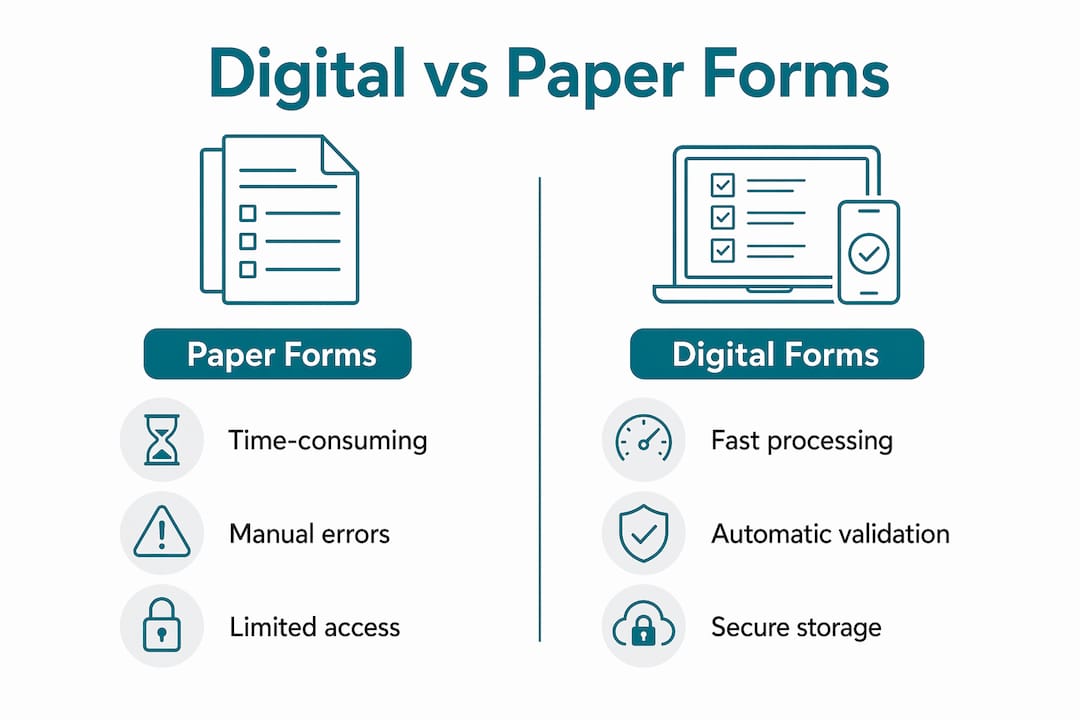
Paper forms are static. Digital forms are active. The difference in what each format can actually do for your salon is significant.
Conditional logic is the standout feature. A digital intake form can show or hide questions based on a client’s previous answers. If a client checks “yes” to a chemical sensitivity, the form automatically presents a patch test consent section. Paper forms ask every client every question, regardless of relevance, which wastes time and creates noise in your records.
Integration with your booking system is equally valuable. When a client books online, a digital form link goes out automatically. By the time they arrive, their client records are updated and ready. No manual entry. No delay at check-in.
| Feature | Paper forms | Digital forms |
|---|---|---|
| Data validation | None | Automatic, real-time |
| Conditional questions | Not possible | Built-in logic |
| Storage and retrieval | Physical filing | Instant search |
| Pre-appointment delivery | Manual handout | Automated text or email |
| Analytics and reporting | Manual tallying | Real-time dashboards |
| Signature legality | Handwritten | Legally binding e-signature |
Data dashboards are a feature salon owners rarely anticipate but quickly rely on. Real-time analytics let you see which services generate the most consultation questions, which client segments have the most contraindications, and where your intake process slows down. Paper forms produce none of that insight without hours of manual work.
Searchable client records replace physical filing entirely. Finding a client’s patch test result from six months ago takes seconds, not a trip to a storage room.
What best practices should salons follow when switching to digital forms?
Switching from paper to digital forms works best when you treat it as a client experience upgrade, not just a back-office change. Clients who understand why the process changed are far more likely to complete forms without hesitation.
- Keep forms short. Single-page digital forms score a System Usability Scale (SUS) rating of 76 compared to 67 for multi-page forms. Higher usability scores mean fewer abandoned forms and fewer errors. Ask only what you need for each service type.
- Send forms before the appointment. Automated delivery via text or email increases completion rates and removes front desk pressure on the day of the visit. Build this into your booking confirmation workflow.
- Offer on-site completion as a backup. A tablet or QR code at the front desk handles clients who did not complete the form in advance. No client should be turned away or delayed because of a technology gap.
- Train your team before launch. Staff who understand how the system works can guide clients confidently. A brief 30-minute walkthrough before go-live prevents confusion on both sides of the desk.
- Review forms quarterly. Client needs and service menus change. Set a calendar reminder to audit your digital forms every three months and remove outdated questions or add new consent fields for new treatments.
The admin work reduction from digital forms compounds over time. The more consistently your team uses the system, the cleaner your client data becomes, and the faster every future interaction runs.
Key takeaways
Digital forms outperform paper forms in salons on every measurable dimension: speed, accuracy, legal protection, and client experience.
| Point | Details |
|---|---|
| Time savings are dramatic | Administrative time per new client drops from over 20 minutes to under 2 minutes with digital forms. |
| Legal protection improves | E-signatures with audit trails and timestamps are legally equivalent to paper and far harder to dispute. |
| Form design matters | Single-page forms score higher on usability and produce fewer errors than multi-page alternatives. |
| Pre-appointment delivery works | Sending forms via text or email before visits increases completion rates and speeds check-in. |
| Data becomes a business tool | Digital forms feed real-time dashboards that reveal client trends and service patterns paper never could. |
Why I think salons underestimate the data advantage
Most salon owners I have spoken with switch to digital forms for one reason: they are tired of the paperwork. That is a good reason. But it is not the best one.
The real payoff shows up three to six months after the switch, when you start looking at your data. You can see which services generate the most allergy disclosures, which client groups ask for patch tests most often, and where your intake form is causing drop-off. None of that is visible in a filing cabinet. Paper forms are a dead end for business intelligence. Digital forms are a starting point.
I have also seen the client perception shift firsthand. Clients who receive a professional digital form before their appointment arrive with a different attitude. They feel like they are being taken seriously. That feeling carries into the service and into their likelihood of rebooking. It is not a small effect.
The hesitation I hear most often is about older clients who are not comfortable with technology. That concern is real but manageable. A tablet at the front desk with a staff member ready to help solves it in under two minutes. The clients who need assistance appreciate the personal touch. The clients who do not need help appreciate the speed. Both groups benefit.
The deeper point is this: transitioning to digital forms is not about replacing the human element of your salon. It is about removing the friction that gets in the way of it. When your front desk is not buried in paper, they are talking to clients. That is where your brand actually lives.
— Artur
Consentify’s digital forms, built for beauty salons
Salon owners who are ready to move past paper have a direct path forward with Consentify. The platform converts your existing paper forms and PDFs into branded digital forms using AI, so you are not starting from scratch.
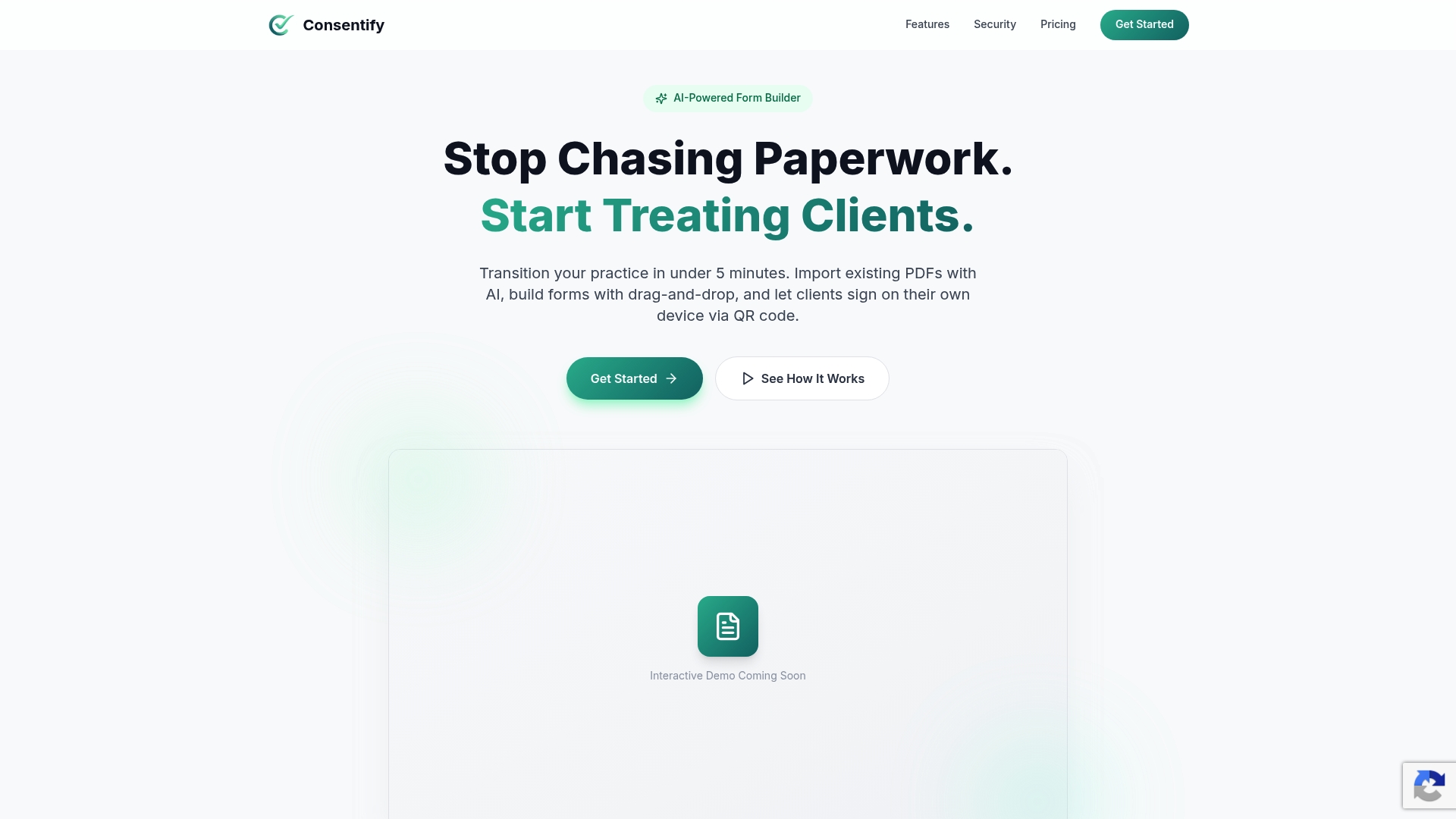
Clients complete and sign forms on their own devices via a QR code, before they ever walk through your door. Every signature is captured with military-grade encryption and a tamper-proof audit trail, so your compliance records are always current. Consentify supports multiple languages, integrates with your booking workflow, and handles before-and-after photo capture in a single platform. For salon owners who want to protect their business and serve clients better, Consentify’s salon forms are the practical next step.
FAQ
How much time do digital forms save per salon client?
Switching to digital intake forms reduces administrative time per new client from over 20 minutes to under 2 minutes. That time saving compounds across every appointment in your schedule.
Are digital consent forms legally valid for salons?
Yes. Electronic signatures on digital consent forms carry the same legal weight as handwritten signatures when the form captures consent immutably with a timestamp and audit trail. Requirements vary by jurisdiction, so consulting a local attorney is advisable.
What is the best way to design a digital salon intake form?
Keep it to a single page. Single-page digital forms score a System Usability Scale rating of 76 versus 67 for multi-page forms, meaning clients complete them more reliably and with fewer errors.
Can clients complete digital forms before their appointment?
Yes. Digital forms can be sent automatically via text or email when a client books. Pre-appointment completion speeds check-in and removes front desk pressure on the day of the visit.
Do digital forms work for clients who are not comfortable with technology?
A tablet or QR code station at the front desk provides an on-site option for clients who did not complete the form in advance. Staff can assist in under two minutes, maintaining the personal service experience your salon is known for.