Send Intake Form Before Appointment: Client Guide
Learn why it's essential to send an intake form before appointment. Streamline your visit, reduce wait times, and enhance your experience!

Send Intake Form Before Appointment: Client Guide

A pre-appointment intake form is a digital document that collects your personal details, health disclosures, and consent before you arrive at a beauty salon or tattoo studio. Sending this form ahead of your visit is the single most effective way to cut wait times, reduce paperwork stress, and give your provider the information they need to deliver a safer, more personalized service. Platforms like Getconsentify, Tattoogenda, and Dialog Health have made this process fast and fully digital. Whether you are booking a lash lift, a microblading session, or your first tattoo, completing your intake form before you walk through the door changes the entire experience.
Why should you send an intake form before your appointment?
Pre-appointment intake forms cover four core categories: personal contact information, relevant health history, service preferences, and your signed consent. Each category serves a specific purpose. Your health history, for example, flags contraindications like blood thinners, skin conditions, or allergies that could affect how your esthetician or tattoo artist approaches your session.
The operational impact is measurable. Digital intake reduces new client check-in time from roughly 25 minutes to under 7 minutes. That time savings goes directly back to your appointment. Instead of filling out a paper form at the front desk while your artist waits, you arrive ready to sit in the chair.
For tattoo studios specifically, pre-session health screening means the artist already has your signed consent and health notes before you walk in. This allows them to focus entirely on the creative work rather than administrative catch-up. The same logic applies to beauty services: a facial or chemical peel requires the provider to know your skin sensitivities in advance, not after the product is already on your face.
Pre-appointment intake is less about paperwork collection and more about enabling better use of your appointment time. Providers who review your information in advance can prepare the right products, adjust their technique, and flag any concerns before you arrive.
- Reduced wait time: You skip the front-desk paperwork queue entirely.
- Safer service: Your provider reviews contraindications before your session begins.
- Personalized preparation: Artists and estheticians tailor their approach based on your disclosed preferences and health notes.
- Fewer errors: Written disclosures reduce the chance of verbal miscommunication about allergies or sensitivities.
Pro Tip: Fill out your health disclosures as accurately as possible, even if a condition seems minor. A detail like recent sun exposure or a new medication can change how a provider approaches your treatment.
What tools are used to send and complete intake forms digitally?
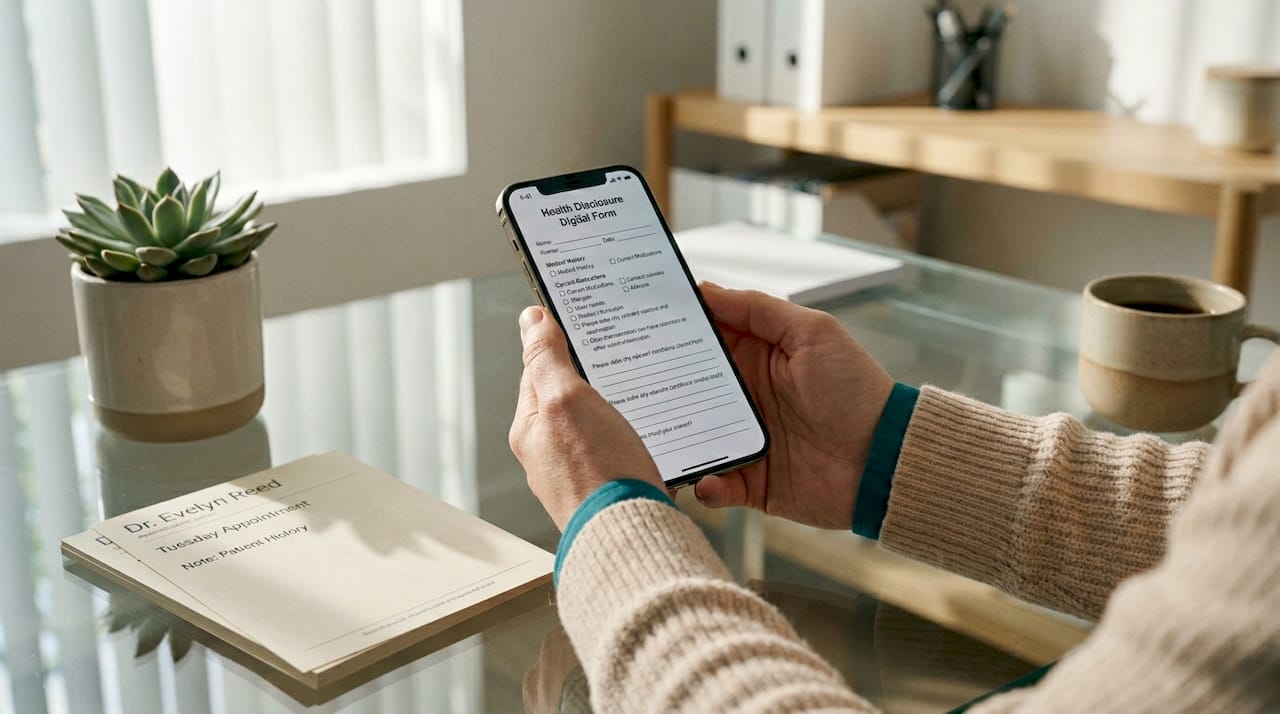
Several platforms have built purpose-specific intake workflows for beauty and body art businesses. Each takes a different approach to form delivery, data capture, and integration with booking systems.
Getconsentify is built specifically for beauty salons, tattoo studios, and wellness clinics. It handles digital consent forms with branded templates, automated delivery tied to booking confirmations, and electronic signature capture. Tattoogenda is designed for tattoo studios and focuses on paperless waivers with conditional health questions that trigger follow-up prompts based on your answers. Dialog Health operates primarily in healthcare but its intake model, sending forms via SMS and email as part of the booking workflow, has become a reference point for how high completion rates are achieved.
The delivery method matters more than most clients realize. Forms embedded in booking confirmations achieve far higher completion rates than separate follow-up emails sent days after booking. Clients engage with a form link when it arrives alongside their appointment details. A standalone “please fill this out” email sent 48 hours later gets ignored.
| Platform | Primary audience | Delivery method | Key feature |
|---|---|---|---|
| Getconsentify | Salons, tattoo studios, clinics | Email, SMS, booking link | Branded forms, AI-assisted fields, e-signature |
| Tattoogenda | Tattoo studios | Booking confirmation link | Conditional health questions, waiver management |
| Dialog Health | Healthcare providers | SMS and email | High completion rate workflows, reminder sequences |
| Acuity Scheduling | General service businesses | Booking confirmation | Intake form templates embedded in scheduling |
Integrating intake forms directly into the tools your provider already uses is what separates a smooth workflow from a frustrating one. Forms that sit outside the booking system require manual transcription, which increases error risk and defeats the purpose of going digital.
Pro Tip: When you receive a booking confirmation, look for the intake form link immediately. Completing it right away, while the appointment is fresh in your mind, takes less than five minutes and prevents last-minute scrambling.
How to complete your intake form before a salon or tattoo appointment
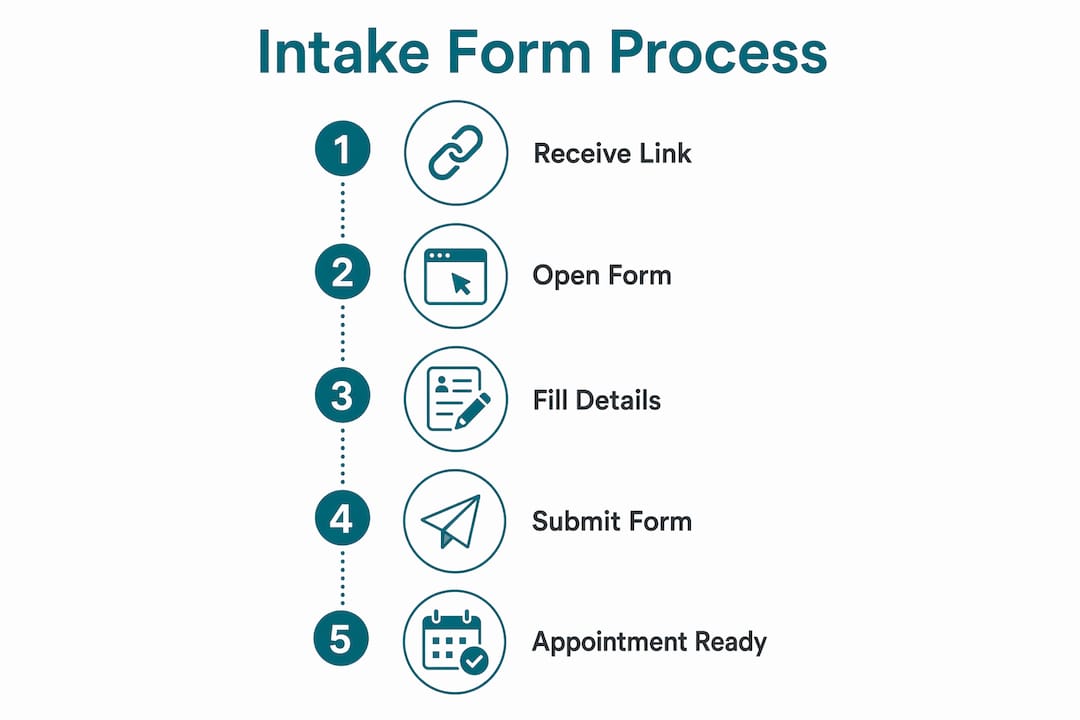
The process follows a predictable sequence, and knowing each step removes any uncertainty about what to expect.
-
Receive the form link. Your salon or studio sends the intake form link inside your booking confirmation email or SMS. Some providers send a separate reminder 24 to 48 hours before your appointment. Links sent 24 to 48 hours ahead achieve completion rates as high as 94%, with 85% of clients fully checked in before they arrive. Open the link as soon as you receive it.
-
Complete the form on any device. Modern intake forms from platforms like Getconsentify are mobile-optimized. You can fill them out on your phone, tablet, or laptop. Some forms ask you to upload a photo ID or a reference image for tattoo consultations. Have those files ready if your confirmation email mentions them.
-
Answer health disclosure questions carefully. This is the section most clients rush through. For tattoo studios, health questions use conditional logic that triggers follow-up prompts based on your answers. If you indicate you take blood-thinning medication, the form may ask for additional detail. Answer each prompt fully. Skipping or guessing creates delays at the studio.
-
Review and sign electronically. Before submitting, read the consent section. Electronic signatures on platforms like Getconsentify carry the same legal weight as a handwritten signature. You are confirming that the information you provided is accurate and that you understand the service terms. This is not a formality to click through.
-
Submit and save your confirmation. After submission, most platforms send a confirmation email. Keep it. If there is any dispute about whether your form was received, that confirmation is your record.
Pro Tip: If your form asks about medications, list all of them, including supplements and over-the-counter products. Providers reviewing your intake ahead of your session can check for contraindications with treatments like chemical peels or permanent makeup pigments.
What to do when your intake form does not arrive or fails to submit
Technical hiccups happen. Knowing how to handle them keeps your appointment on track.
- Check your spam or junk folder first. Automated emails from booking platforms are frequently filtered. Search for the studio or salon name directly in your inbox before assuming the form was not sent.
- Verify your contact information. If you booked by phone or through a third-party site, your email address or phone number may have been entered incorrectly. Call the studio to confirm what contact details they have on file.
- Request a resend. Most providers can resend the form link within minutes. Do not wait until the day of your appointment to flag this issue.
- Check whether the link has expired. Some form links are time-limited for security reasons. If the link no longer works, contact the studio and ask for a fresh one.
- Complete the form on arrival if necessary. Pre-submission is the goal, but it is not always possible. Reputable studios keep paper or tablet-based backup options at the front desk. Arriving 15 minutes early gives you enough time to complete the form without cutting into your session.
If you encounter a form with conditional health questions that seem confusing, do not guess. Contact the studio directly and ask for clarification before submitting. Incorrect health disclosures can lead to service errors or, in tattoo sessions, genuine safety risks.
Staff training on digital intake processes is a recognized gap in many studios. If the person at the front desk cannot help you troubleshoot a form issue, ask to speak with the artist or esthetician directly. They have a direct interest in having your information before your session begins.
Understanding why intake forms prevent service errors makes it easier to take the process seriously. A missed allergy disclosure is not just an inconvenience. It can result in a reaction, a canceled service, or a wasted appointment slot for both you and the provider.
Key takeaways
Sending your intake form before your appointment is the most direct way to reduce wait times, improve service safety, and give your provider the preparation time they need to deliver their best work.
| Point | Details |
|---|---|
| Complete forms immediately after booking | Engaging with the link right away prevents last-minute delays and maximizes completion rates. |
| Answer health disclosures fully | Accurate health information allows providers to check contraindications and adjust their approach before your session. |
| Use the platform your provider sends | Getconsentify, Tattoogenda, and similar tools are purpose-built for beauty and tattoo intake workflows. |
| Troubleshoot early, not on appointment day | Check spam folders and verify contact details as soon as you notice a missing form link. |
| Pre-submission transforms your appointment | Arriving with a completed form shifts your time from paperwork to the actual service. |
Why I think most clients underestimate the intake form
From my experience working with beauty and wellness businesses, the intake form is the most overlooked part of the client journey. Clients treat it as administrative friction. Providers treat it as a compliance checkbox. Both are wrong.
The intake form is the first real conversation between you and your provider. When you disclose that you are on Accutane before a facial, or that you have a keloid history before a tattoo session, you are giving the artist or esthetician the information they need to protect you. That is not paperwork. That is professional communication.
I have seen appointments go sideways because a client skipped a health question they thought was irrelevant. A lash technician who does not know about a client’s latex sensitivity cannot prepare a latex-free adhesive in advance. A tattoo artist who does not know about a client’s tendency to faint cannot position the session to minimize that risk. These are not edge cases. They happen regularly in busy studios.
What I find genuinely encouraging is how platforms like Getconsentify have made the pre-appointment intake process feel like part of the booking experience rather than a separate chore. When the form arrives in the same message as your appointment confirmation, you complete it while you are already engaged. That timing is not accidental. It is the result of understanding how clients actually behave, and designing the workflow around that reality.
The studios that take digital intake seriously are the ones that run on time, deliver consistent results, and retain clients long-term. That correlation is not a coincidence.
— Artur
How Getconsentify makes pre-appointment intake effortless
Getconsentify is built for beauty salons, tattoo studios, and wellness clinics that want to send intake forms before appointments without adding complexity to their workflow. The platform handles branded form creation, automated delivery tied to your booking confirmation, and legally valid electronic signatures, all in one place.
When a client books with a studio using Getconsentify, the intake form goes out automatically as part of the confirmation. No manual follow-up. No chasing clients the morning of their appointment. For tattoo studios, Getconsentify supports body modification consent forms with conditional logic and health screening built in. If your studio is still relying on paper forms or disconnected email attachments, Getconsentify is the direct upgrade.
FAQ
What is a pre-appointment intake form?
A pre-appointment intake form is a digital document sent to clients before their visit that collects personal details, health history, service preferences, and consent. It replaces paper forms completed at the front desk and allows providers to review client information before the session begins.
How far in advance should I complete my intake form?
Complete your intake form as soon as you receive the link, ideally 24 to 48 hours before your appointment. Forms completed in this window achieve the highest submission rates and give your provider adequate preparation time.
What happens if I did not receive my intake form link?
Check your spam or junk folder first, then contact the salon or studio to verify your contact details. Most providers can resend the link within minutes, and reputable studios maintain backup options for completing the form on arrival.
Why do tattoo studios ask conditional health questions on intake forms?
Tattoo studios use conditional logic in their intake forms to manage session safety. If you disclose a relevant health condition, the form triggers follow-up questions to gather the detail the artist needs before your session. These conditional prompts reduce front-desk delays and allow for proper pre-session preparation.
Is my information safe when I submit a digital intake form?
Reputable platforms like Getconsentify use encrypted data storage and comply with privacy regulations applicable to health and personal data. Your intake information is accessible only to the provider and is not shared with third parties.