Salon Minor Client Consent Requirements: 2026 Guide
Discover essential salon minor client consent requirements for 2026. Ensure your child’s safety and your salon’s legal protection. Read more!

Salon Minor Client Consent Requirements: 2026 Guide

Salon minor client consent requirements are the documented, service-specific authorizations that a parent or legal guardian must provide before a salon performs any treatment on a client under 18. These requirements exist at two levels: internal salon policy and state or local law. Getting this wrong exposes your salon to legal liability and puts your child’s safety at risk. This guide breaks down exactly what you need to know before booking a salon appointment for your minor, from a basic haircut to a tattoo or chemical treatment.
1. What are the general consent requirements for minors in salons?
Parental or guardian authorization is the baseline requirement for any salon service performed on a minor. Most salons require written consent before the appointment begins, and many require a parent or guardian to be physically present during the service. This is not just a courtesy policy. It is a legal and safety standard that protects both the minor and the business.
Standard salon consent practices for minors typically include:
- Written consent forms signed by a parent or guardian before the service starts
- Parental presence required for children under 12 or 13, depending on the salon’s policy
- Informed consent language that explains the specific service, its risks, and any aftercare requirements
- Age verification to confirm the minor’s date of birth and the guardian’s identity
Some salons restrict services to minors only when accompanied by a parent or with prior written authorization from a guardian, with explicit age limits stated in their terms. This means a teen cannot simply walk in alone and receive a chemical treatment without prior documented approval. The consent form must be specific to the service being performed, not a blanket release covering everything.
Pro Tip: Ask the salon to send you the minor consent form before the appointment so you can review it carefully, ask questions, and arrive prepared rather than signing under time pressure at the front desk.

2. How consent requirements vary by service type
Not all salon services carry the same risk, and consent requirements reflect that directly. A basic haircut for a child carries minimal risk and typically requires only a signed parental consent form or in-person parental presence. A chemical relaxer, keratin treatment, or tattoo is a different matter entirely.
| Service Type | Consent Level Required | Additional Requirements |
|---|---|---|
| Haircut / styling | Basic written parental consent or presence | Age verification |
| Chemical treatments (color, relaxer) | Written parental consent + patch test | Parental presence recommended |
| Semi-permanent makeup | Detailed service-specific consent form | Often age-restricted to 16+ |
| Tattoo | State-mandated informed consent form | Parent/guardian signature + ID verification |
For regulated services like tattooing, the requirements go far beyond a simple permission slip. Virginia regulations require both the minor and their parent or guardian to sign a board-prescribed disclosure form that includes verbal and written risk acknowledgements before the tattoo begins. The tattooer must verify age with a valid photo ID and maintain permanent client records for at least two years. This is a legally defined informed consent process, not an informal agreement.
Chemical treatments occupy a middle ground. There is no universal regulatory minimum age for chemical salon services, but professional best practices advise avoiding them under age 12 and requiring parental consent along with a patch test for clients between 12 and 16. Children’s hair and scalp differ significantly from adults, making conservative approaches and clear parental consultation the professional standard.
Pro Tip: For any chemical service on a minor, request a patch test at least 48 hours before the appointment. A reputable salon will offer this without hesitation, and it is your clearest indicator of how seriously they take minor client safety.
3. Age-related policies that affect what services minors can receive
Age is the primary variable that determines how much parental involvement a salon requires and which services are available to a minor. Most salons organize their policies around two or three age brackets, each with distinct rules.
Here is how age typically shapes salon access for minors:
- Under 12: Parental accompaniment is required throughout the service. Chemical treatments are generally not offered or are strongly discouraged. Consent is provided verbally and in writing by the parent on-site.
- Ages 12 to 15: Written parental consent is required for all services. Chemical treatments may be available with signed consent and a mandatory patch test. A parent or guardian should remain in the salon, though not necessarily in the styling chair area.
- Ages 16 to 17: Teens may receive most standard services with written parental consent. Some salons allow unaccompanied visits at this age if prior written authorization has been provided. Regulated services like tattooing still require in-person parental presence and formal consent documentation.
Salon safety protocols consistently recommend that parents remain in the immediate vicinity during services for younger children, with written parental consent required for unaccompanied teen visits. This dual approach, physical presence for younger children and documented authorization for teens, reflects both safety and liability management. As a parent, understanding which bracket your child falls into before booking saves confusion and protects your child.
4. How salons should manage consent forms and documentation
Proper documentation is where many salons fall short, and where parents can also advocate for better practice. A signed form collected once and filed away is not sufficient for ongoing or high-risk services. Service-specific consent forms for high-risk treatments like chemical peels and semi-permanent makeup are the professional standard, rather than relying on a single general intake form.
Best practices for consent documentation include:
- Use service-specific forms. A chemical relaxer consent form should list the specific chemicals used, potential contraindications, and aftercare. A tattoo consent form must meet state board requirements.
- Reconfirm consent at each appointment. Medical histories and contraindications change. A child who had no allergies last year may have developed one. Reconfirming consent protects both the minor and the salon.
- Maintain secure records. For regulated services like tattooing, recordkeeping obligations require permanent client files retained for at least two years. General salon records should be kept for a minimum period consistent with your state’s requirements.
- Go digital. Paper forms get lost, damaged, or misfiled. Digital consent tools allow easy updates, audit-ready archives, and faster retrieval during disputes or inspections.
| Documentation Task | Recommended Practice |
|---|---|
| Initial consent | Service-specific form signed before first appointment |
| Repeat visits | Reconfirm consent and check for health changes |
| Record retention | Minimum 2 years for regulated services; follow state law |
| Storage method | Secure digital archive preferred over paper filing |
As a parent, you have every right to ask a salon how they store your child’s consent records and for how long. A salon that cannot answer that question clearly is one worth reconsidering.
5. What happens when salons fail to obtain proper minor consent
The consequences of skipping or mishandling minor consent are serious on multiple fronts. Legal penalties for non-compliance with state regulations can include fines, license suspension, or permanent revocation for the salon or individual practitioner. For regulated services like tattooing, performing a procedure on a minor without the required board-prescribed consent form is a direct regulatory violation.
Beyond legal penalties, the safety risks to minors are real. A chemical treatment performed without a patch test or parental health disclosure can trigger allergic reactions, scalp burns, or long-term hair damage. Without documented consent, the salon has no record of contraindications disclosed by the parent, which removes a critical safety checkpoint.
“Consent rules for minors involve two layers: internal salon policy and legal regulations. Both must be satisfied before any service begins.” Virginia Rule 18-41-50-410
Reputational damage compounds the legal and safety risks. A single incident involving a minor, whether an allergic reaction or a regulatory complaint, can generate significant negative attention. Parents talk to other parents. A salon known for cutting corners on minor client safety loses the trust of an entire family demographic. Clear, documented consent policies are not just a compliance checkbox. They are a direct signal to parents that your child is in professional hands.
Key takeaways
Salon minor client consent requirements protect both the minor and the salon by mandating service-specific, documented parental authorization before any treatment begins.
| Point | Details |
|---|---|
| Two-layer consent system | Salons must satisfy both internal policy and state law before serving minors. |
| Service-specific forms required | General intake forms are insufficient for chemical treatments, tattoos, or semi-permanent services. |
| Age determines access | Children under 12 require parental presence; teens need written authorization for most services. |
| Recordkeeping is mandatory | Retain consent records for at least 2 years for regulated services; go digital for reliability. |
| Non-compliance carries real risk | Missing consent exposes salons to fines, license loss, and reputational damage. |
Why consent forms for minors deserve more attention than they get
I have reviewed hundreds of salon intake workflows, and the pattern is consistent: salons invest heavily in adult client consultations and almost nothing in minor-specific consent processes. A parent hands over a child, signs whatever is on the counter, and assumes the salon has it handled. Most of the time, that assumption is wrong.
The two-layer consent system, salon policy plus state law, is not widely understood by parents or, frankly, by many salon owners. Virginia’s tattoo regulations are a useful example because they are explicit and enforceable. But the same principle applies to chemical treatments, semi-permanent brow services, and even certain scalp treatments. Each service carries its own risk profile, and a single general waiver does not address any of them adequately.
My recommendation to parents is direct: before any appointment involving a chemical service or regulated procedure, ask the salon to show you the specific consent form your child will be covered by. If they hand you a generic one-page release, that is a red flag. A well-run salon will have a service-specific form that names the treatment, lists the risks, and asks about contraindications. That document is your child’s safety net and the salon’s legal protection.
Digital recordkeeping is the other piece most salons underinvest in. Paper forms filed in a drawer are not audit-ready. They get lost. They cannot be updated when a child’s health history changes. The salons that handle minor consent well are the ones that treat it as an ongoing process, not a one-time signature.
— Artur
How Getconsentify makes minor consent management simple
Managing salon minor consent requirements across multiple service types and age groups is complex. Getconsentify removes that complexity with digital consent forms built specifically for beauty and wellness professionals.
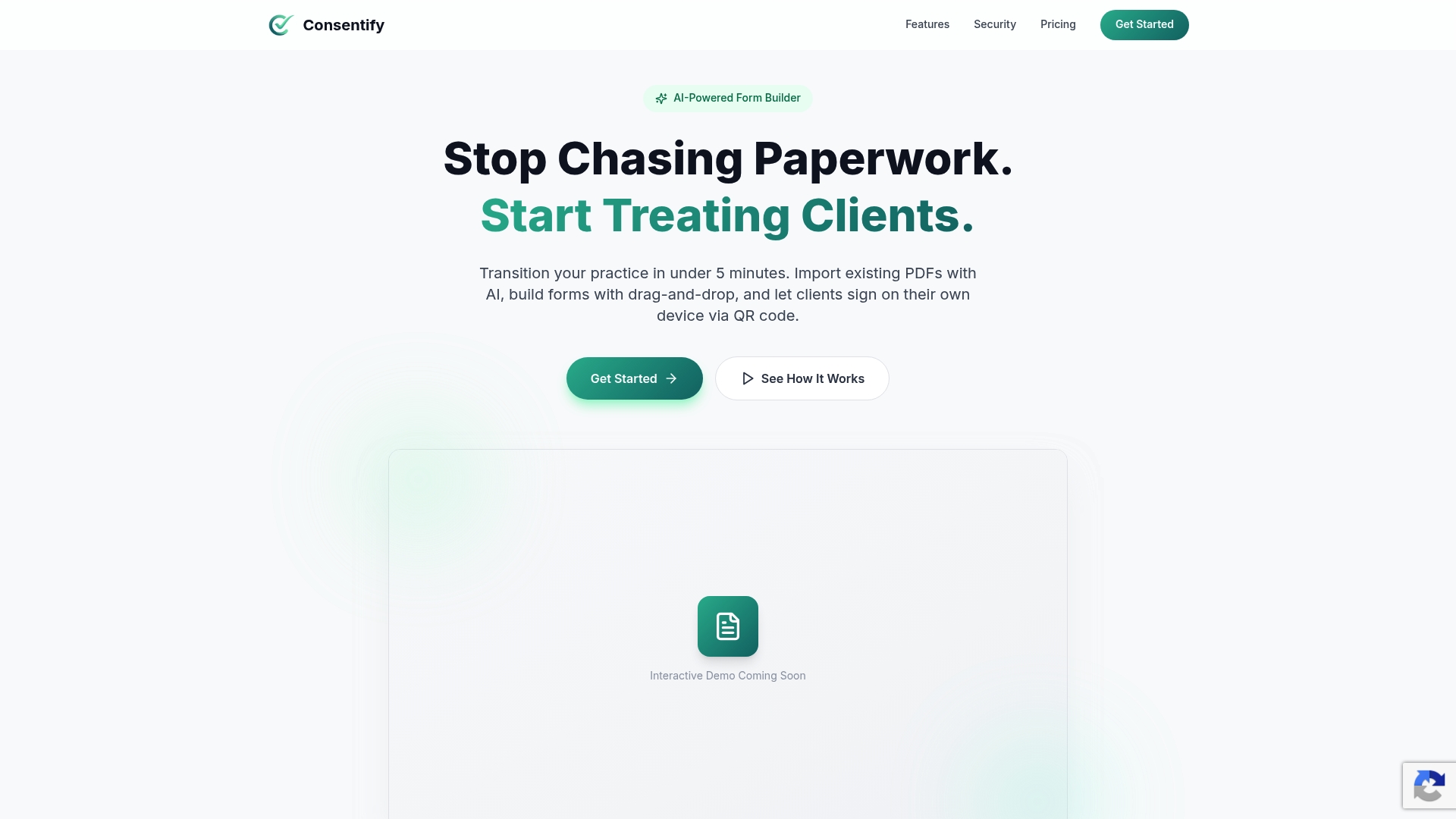
With Getconsentify, you get service-specific consent workflows that capture the right information for each treatment, whether that is a minor haircut, a chemical service, or a regulated procedure. Forms are automatically archived and retrievable for audits or disputes. Parents can complete consent documentation before the appointment, reducing front-desk friction and errors. For salons serving minor clients regularly, Getconsentify turns a compliance obligation into a professional, client-centered experience that builds trust from the first interaction.
FAQ
What is required on a minor consent form for salon services?
A minor consent form should include the specific service being performed, associated risks, the parent or guardian’s signature, and the minor’s date of birth. For regulated services like tattooing, state-mandated forms with detailed risk disclosures are required.
Do parents need to be present at the salon for a minor’s appointment?
Most salons require parental presence for children under 12 or 13. Teens aged 16 to 17 may attend with prior written parental authorization, depending on the salon’s policy and the service type.
Are there age restrictions on chemical treatments for minors in salons?
Chemical treatments have no universal regulatory minimum age, but professional standards advise against them for children under 12. Between ages 12 and 16, written parental consent and a patch test are the accepted minimum requirements.
How long must salons keep minor client consent records?
For regulated services like tattooing, records must be retained for at least two years per state regulations such as Virginia Rule 18-41-50-410. General salon consent records should be kept according to your state’s specific requirements.
Can a minor get a tattoo with parental consent?
In states like Virginia, a minor can receive a tattoo only if both the minor and a parent or guardian sign a board-prescribed disclosure form, the tattooer verifies age with photo ID, and all consent documentation is permanently retained on file.