Digital Consent Forms vs. Paper: Why Clinics Are Going Paperless
Paper consent forms slow clinics down and create compliance risk. Here's how digital consent forms compare, and what to look for when you switch.
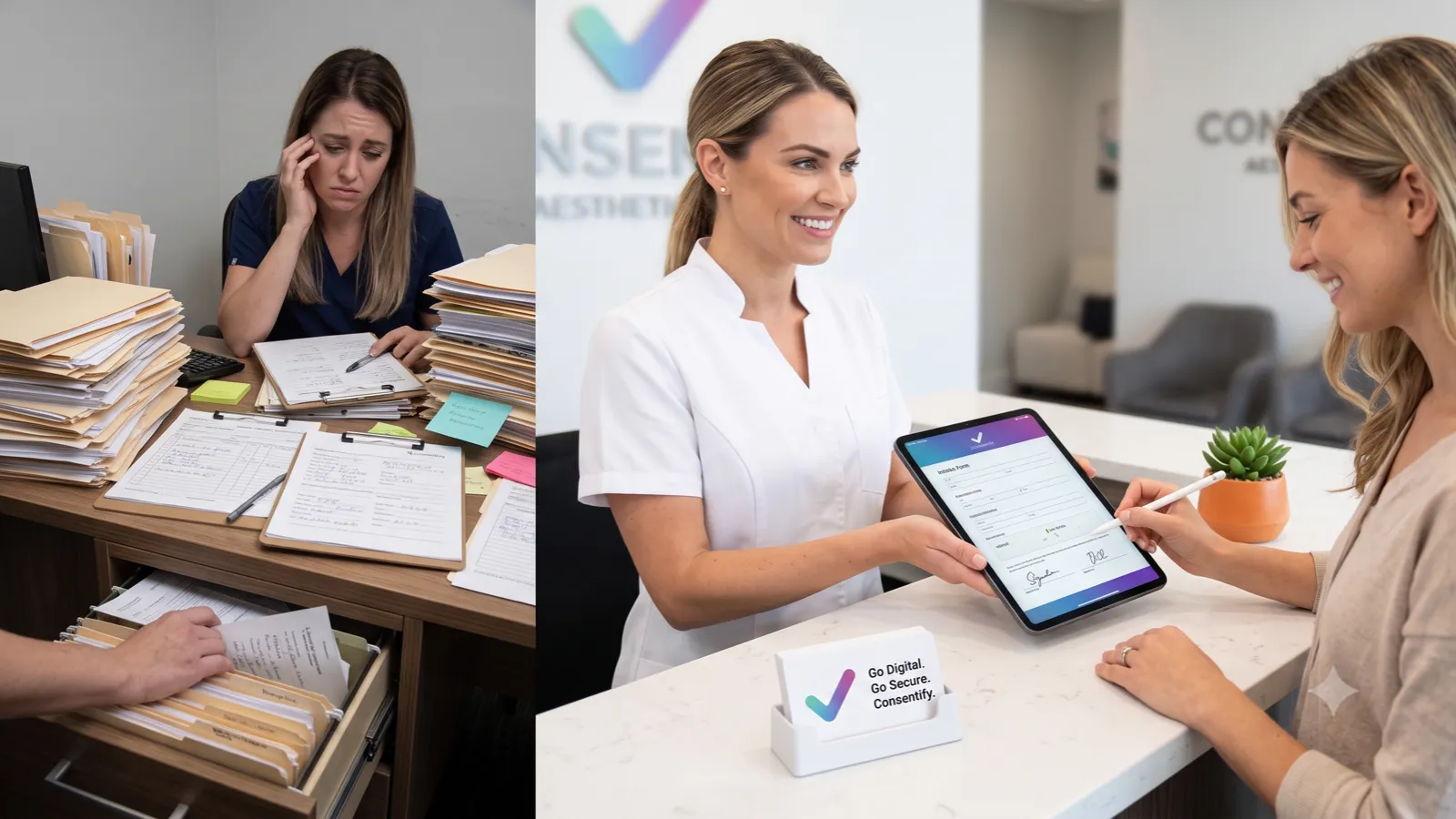
Every clinic runs on forms: consent, intake, medical history, photo releases. For decades those forms lived on a clipboard. But paper quietly costs more than most practices realize: storage space, illegible handwriting, forms that go missing right before an audit, and no reliable record of who signed what, and when. As practices modernize, digital consent forms have become the default. Here's an honest comparison, and what to look for if you're thinking about the switch.
The hidden cost of paper
Paper feels free because you already own the printer. The real expenses show up later:
- Retrieval time. Finding one signed form in a filing cabinet can take minutes; across a busy week that adds up to hours.
- Legibility and completeness. Missed fields and unreadable handwriting create gaps exactly where you need certainty.
- No audit trail. A paper signature tells you it happened: not when, on which version of the form, or whether anything changed afterward.
- Storage and shredding. Physical records take space and require secure disposal.
What digital consent forms change
Moving intake to a tablet isn't just "paper on a screen." Done well, it changes the workflow:
Instant, searchable records
Every submission is stored and searchable by client name, date, or form type. No cabinet, no photocopies. The record is one search away.
Real e-signatures with an audit log
A proper digital system captures the signature and a timestamped log of the exact form version that was signed. If a form is later amended, the original is preserved alongside the change. That's the difference between "we think they signed" and provable documentation.
Faster, more complete intake
Required fields can't be skipped, conditional questions only appear when relevant, and clients can complete forms on their own phone before they arrive, so the front desk isn't a bottleneck.
Branding and a better first impression
A clean, branded form signals professionalism far more than a photocopied sheet, and it reassures clients that their information is handled carefully.
"But what about internet outages?"
A common worry, and a fair one. The answer is offline support: a good app lets clients keep filling and signing forms with no connection, then syncs automatically when you're back online. Nothing is lost, and the front desk never stops.
What to look for when you switch
- Clients sign on their own device. The best flow lets a client scan a QR code and sign on their phone. No app for them to download.
- A tamper-evident activity log. Look for a permanent record of signatures, views, and amendments.
- Offline mode. Your intake shouldn't depend on perfect Wi-Fi.
- Easy form building. You should be able to adapt your existing forms, or import them, without a developer.
- Exportable PDFs. You still need a clean PDF for records, insurers, or the client's copy.
The bottom line
Paper isn't dangerous, but it's slow, hard to search, and thin on proof. Digital consent forms give you the same signed document plus speed, searchability, and a defensible record. For most clinics the switch pays for itself in reclaimed front-desk time within the first month.
Consentify turns your existing consent and intake forms into branded digital forms clients sign on their own phone: with an audit log, offline support, and exportable PDFs. See how it works →